How Can You Add Shade and Privacy to Outdoor Areas?
Improve outdoor shade and privacy with aluminium plantation shutters, awnings, smart placement, lighting, weather planning and simple maintenance.


A muddy backyard after rain, worn grass near a shop entrance or a pet run that never seems to stay neat can make outdoor areas frustrating to manage. Natural turf can look great, but it needs regular watering, mowing, repair and protection from heavy use.
Synthetic lawn offers a low-maintenance alternative for homes with pets and businesses that need a clean, presentable outdoor surface. It is not the right answer for every site, though. The best choice depends on drainage, traffic levels, cleaning needs, the quality of the product and how the space will be used.
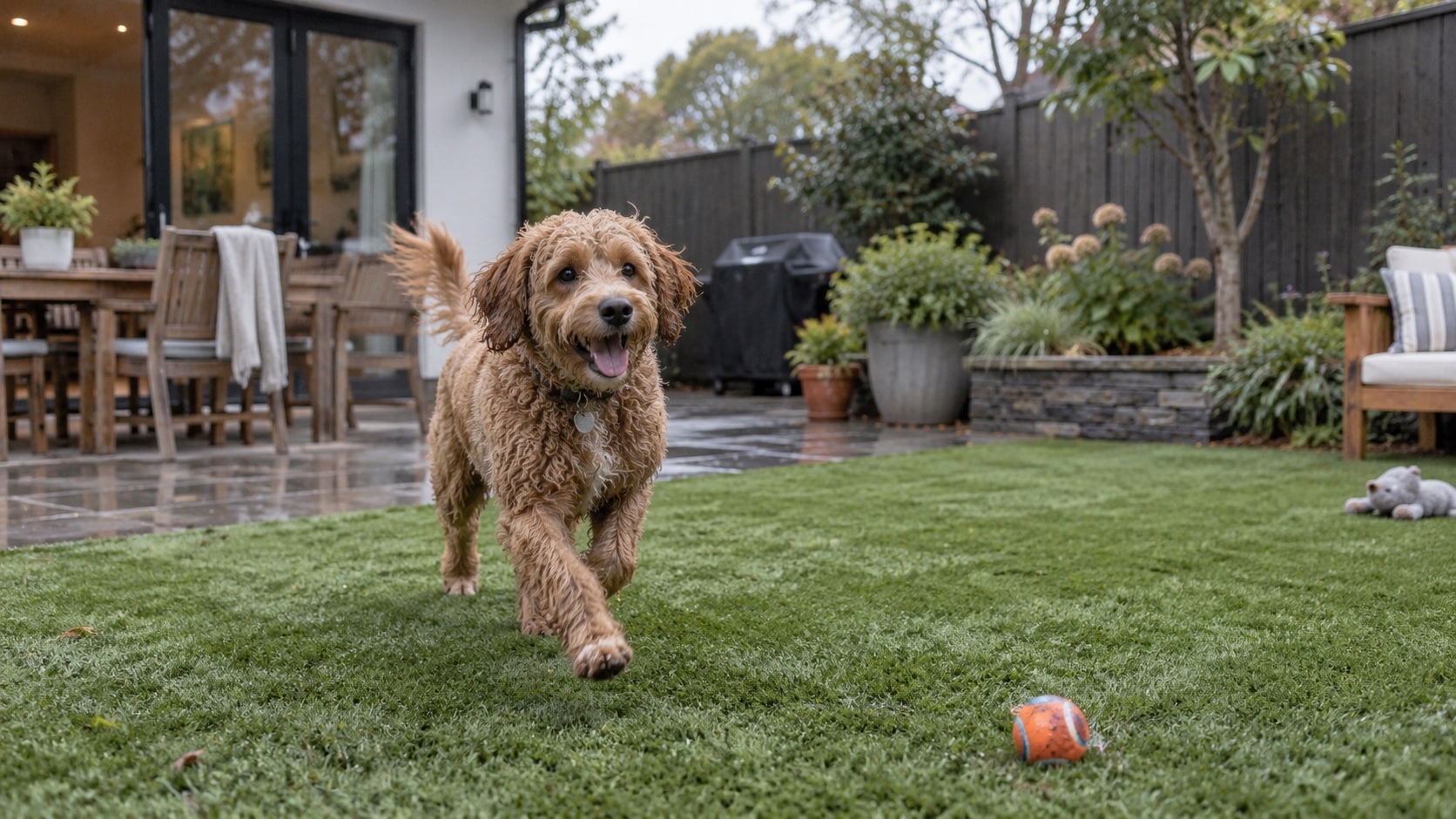
Pets can quickly wear paths into natural grass, dig in soft soil and bring mud indoors after rain. Pet friendly artificial grass creates a durable, even surface for many backyards, pet runs and side areas, helping reduce bare patches and muddy paws.
The right pet friendly artificial grass should be selected with drainage and cleaning in mind. A well-prepared base allows water to move through the surface, while suitable turf construction can make it easier to remove pet waste and rinse the area when required.
Not every pet uses an outdoor area in the same way. A small dog that spends short periods outside will place different demands on the lawn than several active dogs using the same run every day. Consider the size of the area, the number of pets and whether the space receives full sun, shade or frequent rain.
Before installing synthetic lawn for pets, think about:
A good installation starts below the grass. If the base is uneven or drainage is poor, water can pool and the surface may not perform as expected.
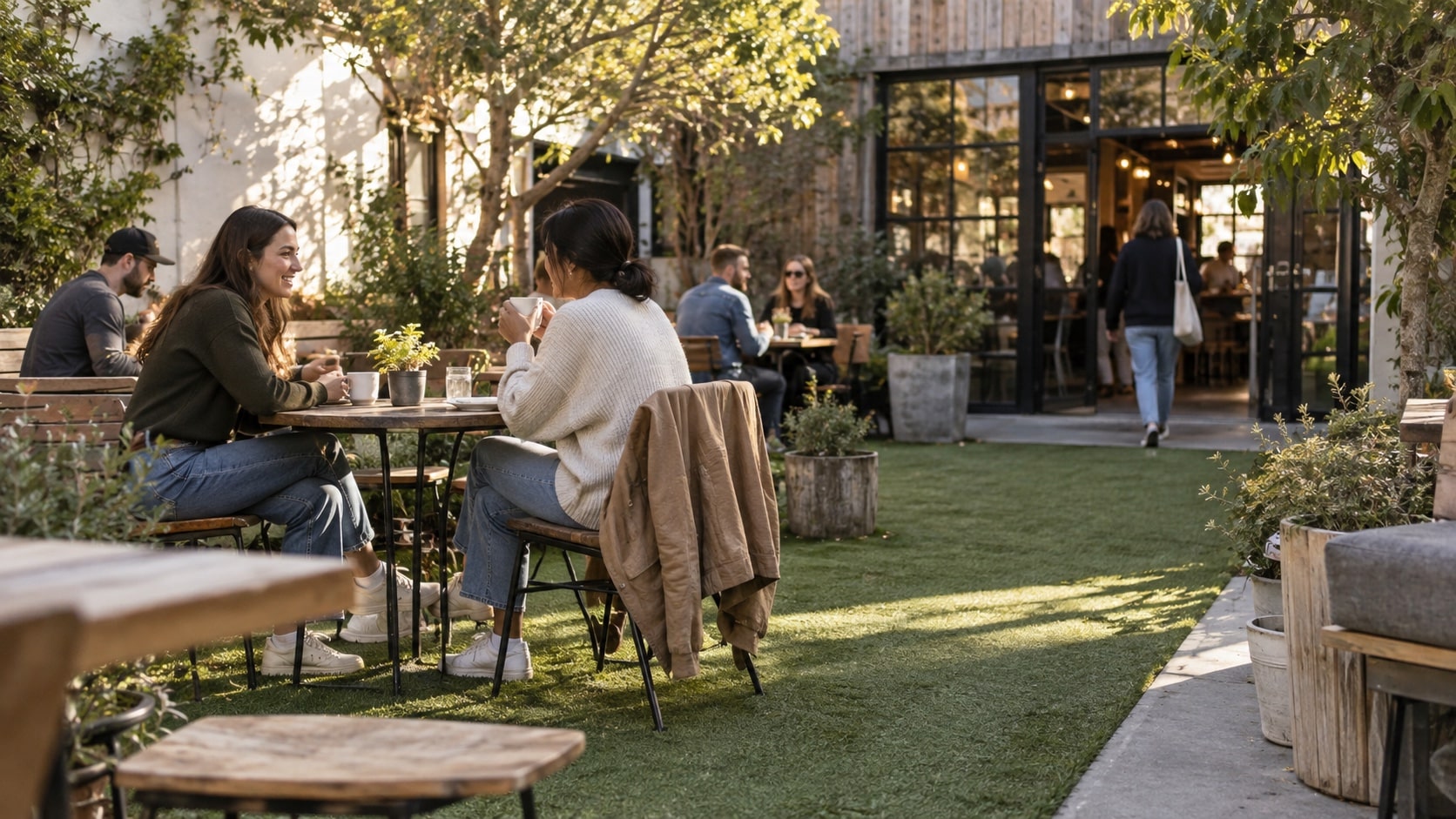
Businesses often need outdoor surfaces that stay neat despite regular foot traffic, changing weather and limited time for grounds maintenance. Synthetic grass can work well in entry areas, hospitality spaces, display zones, childcare play areas and selected retail settings when the product is chosen for the job.
High-quality commercial artificial grass can provide a consistent green appearance without mowing or routine watering. It may also help businesses avoid the patchy appearance that natural grass can develop in heavily used areas.
The installation needs to match the site. A decorative feature area has different needs from an outdoor dining section, a busy walkway or a pet-friendly business setting. The expected traffic level affects the turf type, base preparation and edge detailing.
Commercial sites should plan for:
Synthetic lawn can support a polished outdoor presentation, but it still needs regular care. Leaves, food waste, spills and loose debris should be cleared promptly to protect hygiene and maintain the appearance of the surface.
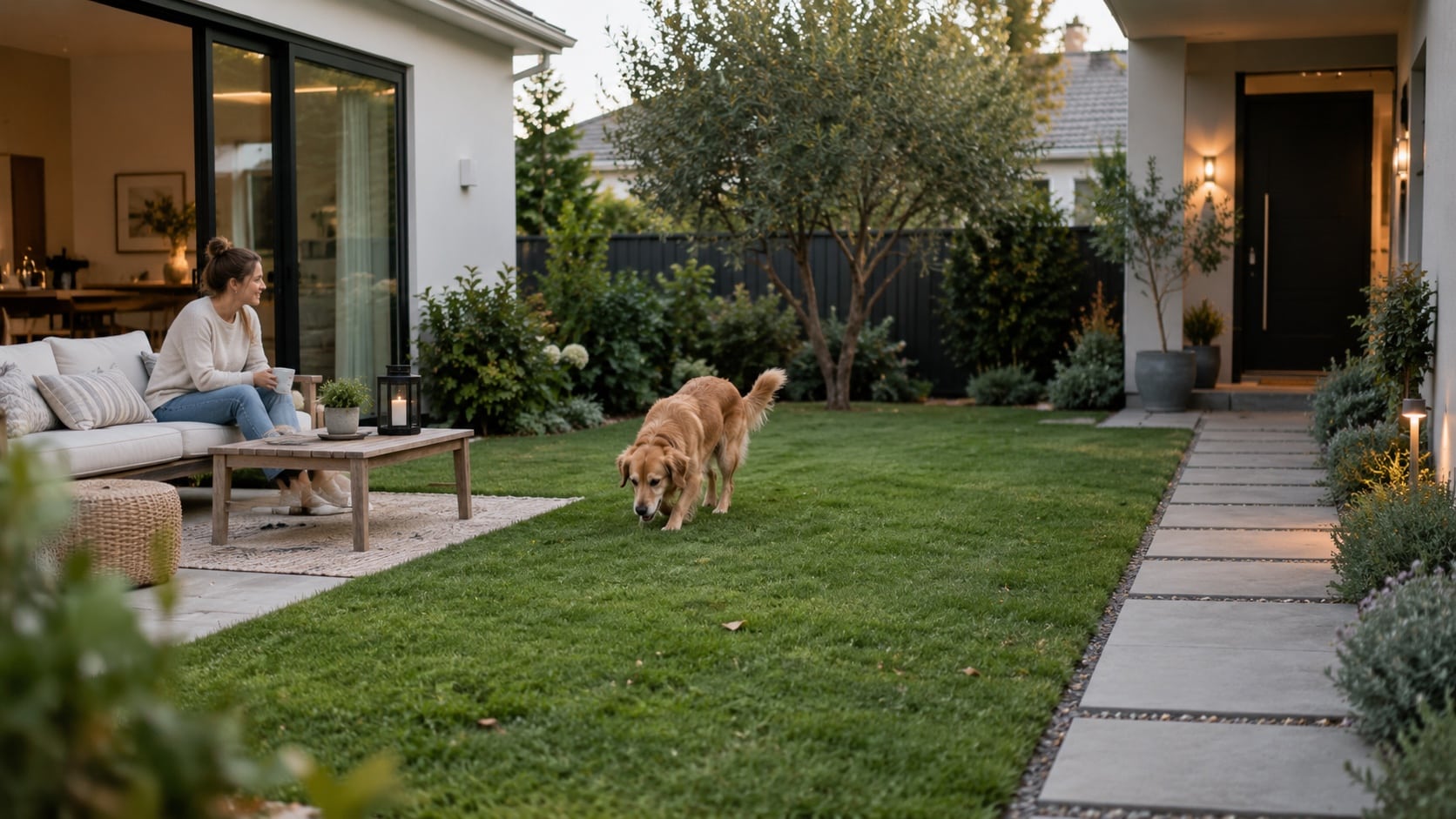
Synthetic lawn can reduce ongoing garden work, especially in areas where natural grass struggles to recover from daily use. It does not require mowing or fertilising, and it can remain green through dry periods without the routine watering natural turf needs.
For households, the appeal often comes from a cleaner outdoor space. Pets are less likely to track soil through the house after rain, and families can use the yard without waiting for muddy ground to dry out. For businesses, the attraction is a tidy finish that can complement an entry, courtyard or outdoor service area.
Other potential benefits include:
These benefits rely on suitable materials and sound installation. Synthetic grass cannot fix underlying drainage problems, unstable ground or poor site layout on its own.
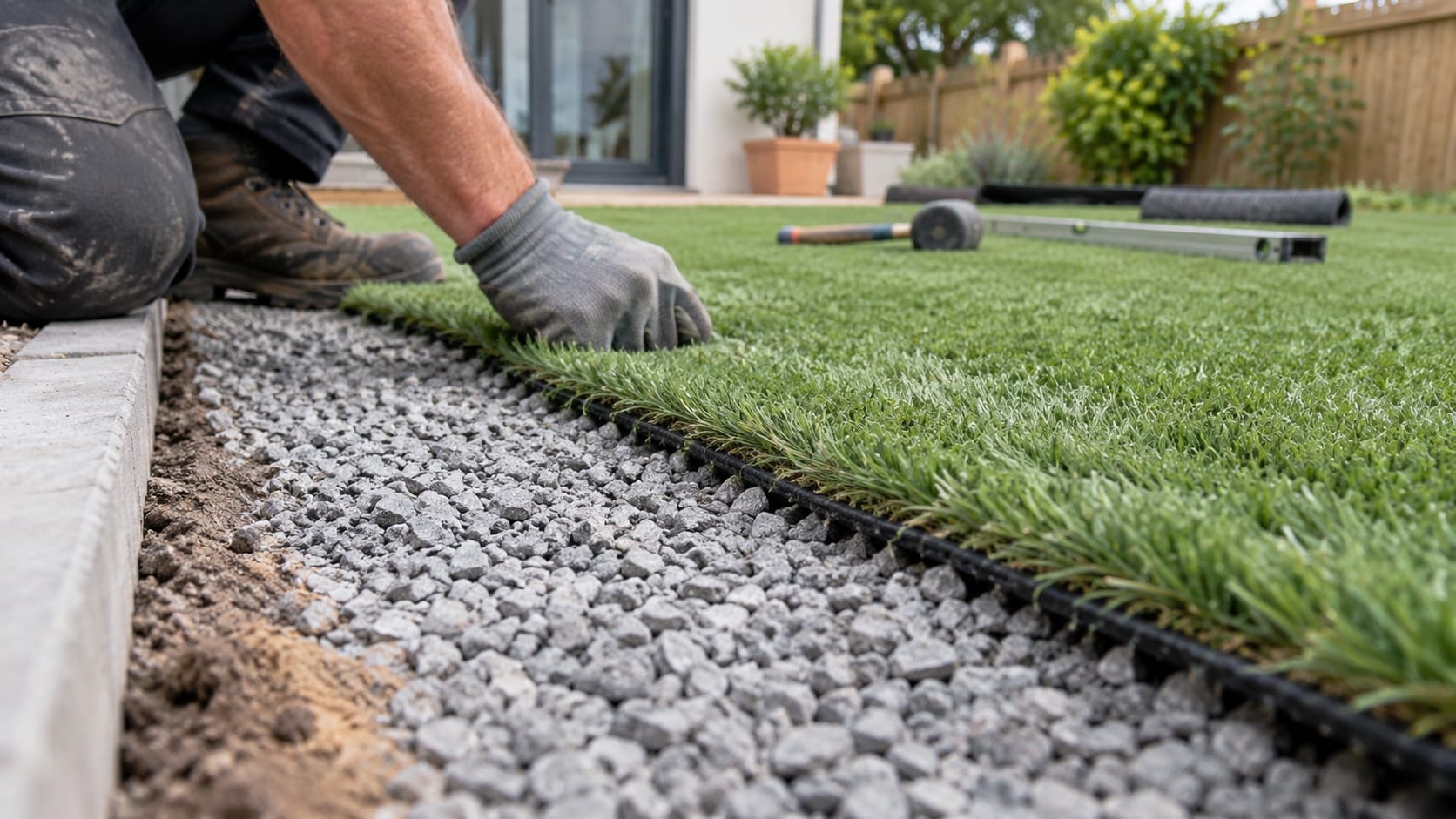
Drainage is one of the most important parts of a synthetic lawn project. Water needs a clear path away from the surface and the surrounding area. Without it, the lawn may feel wet underfoot, develop unpleasant odours or allow water to collect beside buildings.
A professional installer should inspect the slope, soil, nearby downpipes and existing drainage points before starting work. This helps identify whether the area needs excavation, a new base, drainage improvements or a different layout.
Watch for warning signs before installation:
For pet areas, cleaning water also needs somewhere to go. A lawn that drains well is easier to rinse and is less likely to hold moisture after regular use.
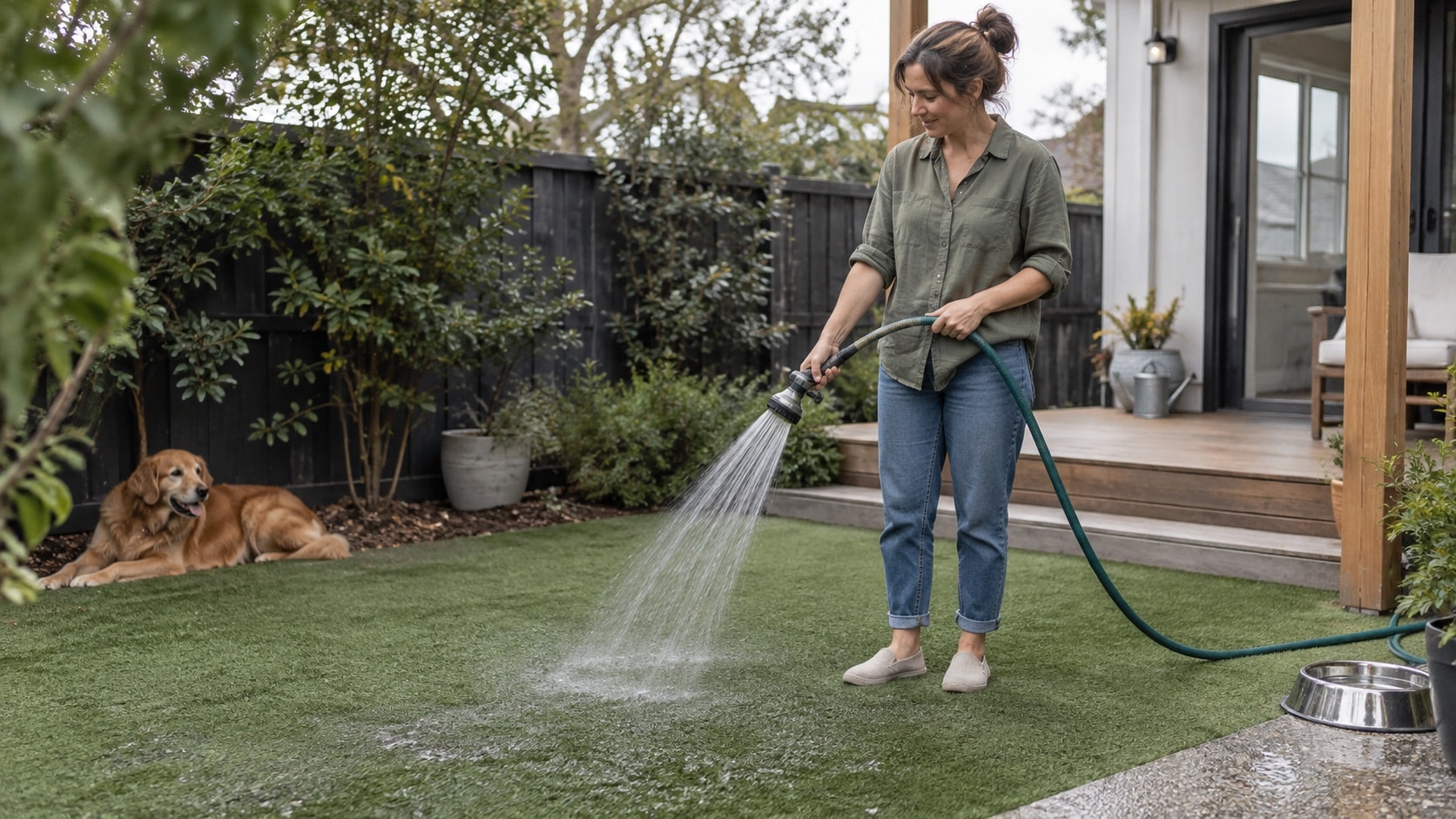
Synthetic grass can make pet areas easier to manage, but it is not maintenance-free. Solid waste should be removed as soon as possible, and the area should be rinsed regularly with clean water. This helps remove residue and keeps the surface more pleasant for pets and people.
If odours develop, identify the cause rather than masking it. Build-up can occur when waste is not removed promptly, the area has poor drainage or the space is too enclosed to dry properly. A cleaning routine that matches the number of pets and how often the area is used will help keep the lawn in good condition.
For a practical pet lawn routine:
Pets also need shade, fresh water and a comfortable place to rest. Synthetic lawn is one part of a well-planned pet area, not a replacement for proper shelter and supervision.
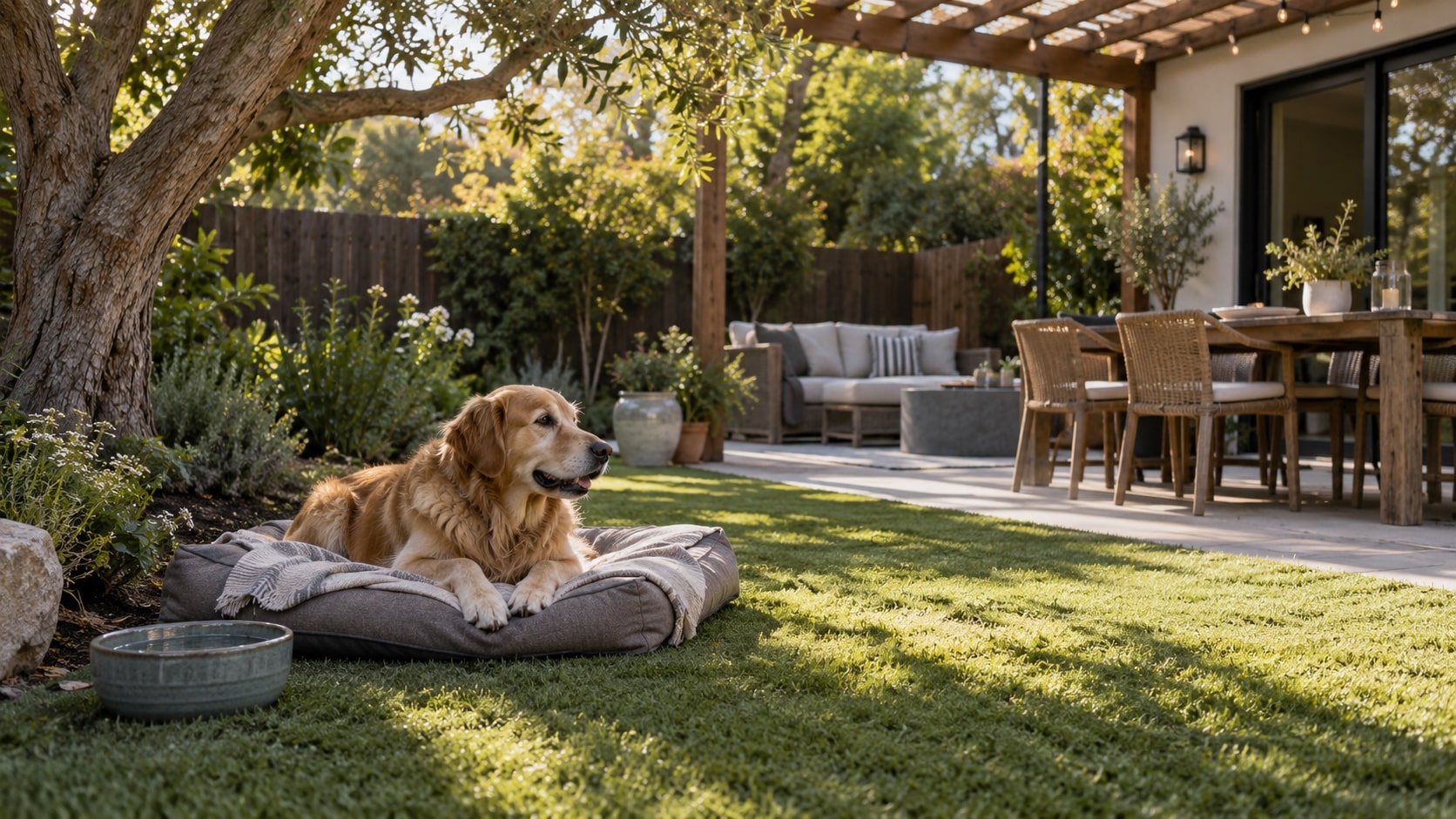
Synthetic grass can feel warmer than natural grass in direct sun, particularly in areas surrounded by paving, walls or reflective surfaces. This is relevant for pet runs, childcare spaces, outdoor seating and any place where people or animals spend time during hot weather.
Check the surface temperature before letting pets or children use the area on warm days. Add shade where practical, provide water for pets and avoid scheduling active outdoor use during the hottest part of the day.
Shade can also affect how a lawn performs. Heavy shade may leave an area slower to dry after rain or washing, while tree cover can increase leaf build-up. Plan the location of trees, furniture, outdoor kitchens and shade structures before installation so the lawn remains easy to clean and use.
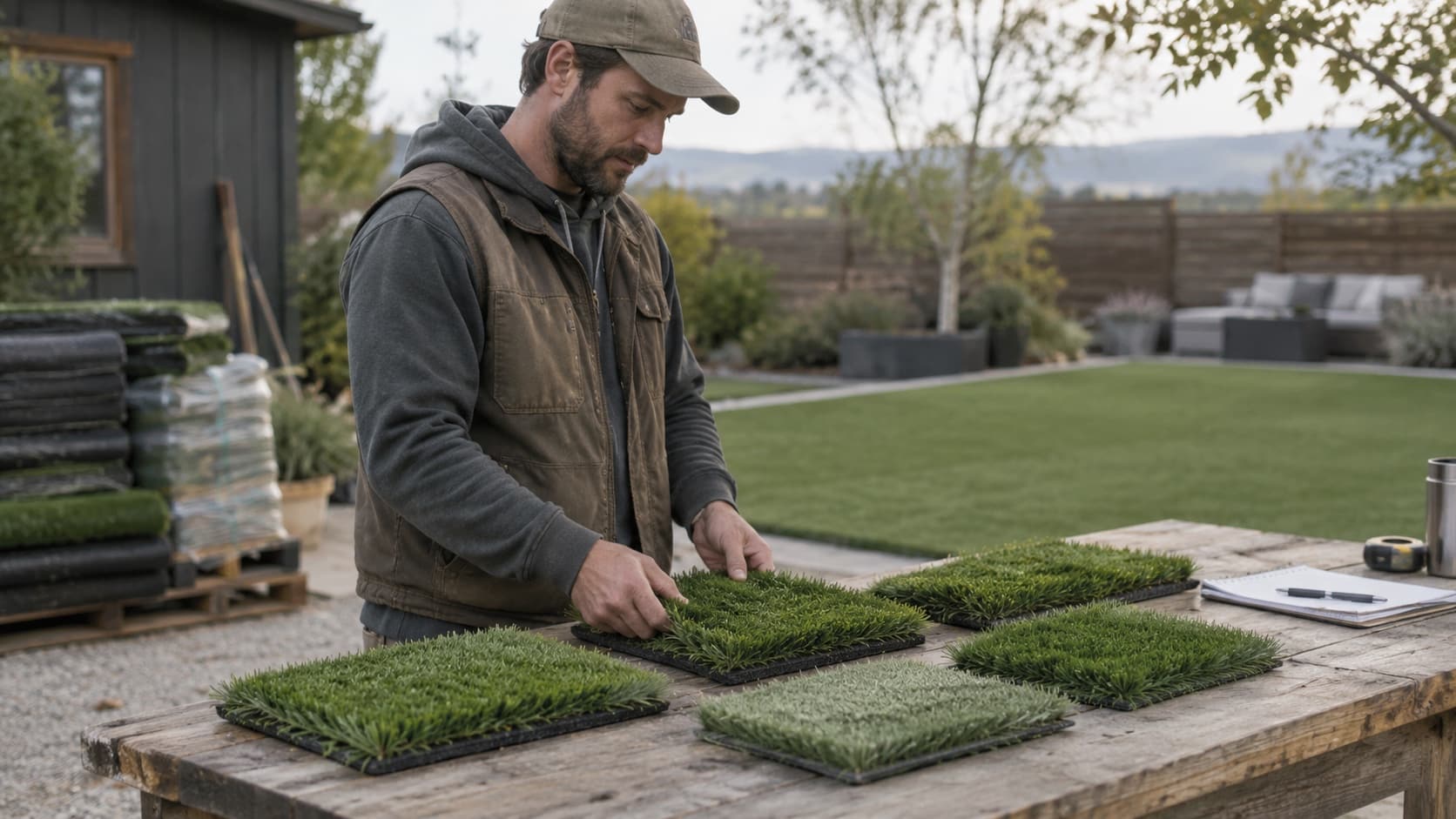
Synthetic grass is available in different pile heights, colours, fibre shapes and levels of density. The best option depends on whether the area is mainly decorative, used by pets, exposed to frequent foot traffic or intended for customer-facing outdoor spaces.
A softer feel may suit a residential play or pet area, while a denser, hard-wearing surface may be better for a busy commercial zone. Appearance also matters. A realistic finish can complement landscaped areas, while a shorter pile may suit spaces that need easy cleaning.
Ask your installer about:
Avoid selecting synthetic lawn based only on a small sample. A site measure and discussion about daily use can help you choose a product that suits the full space.
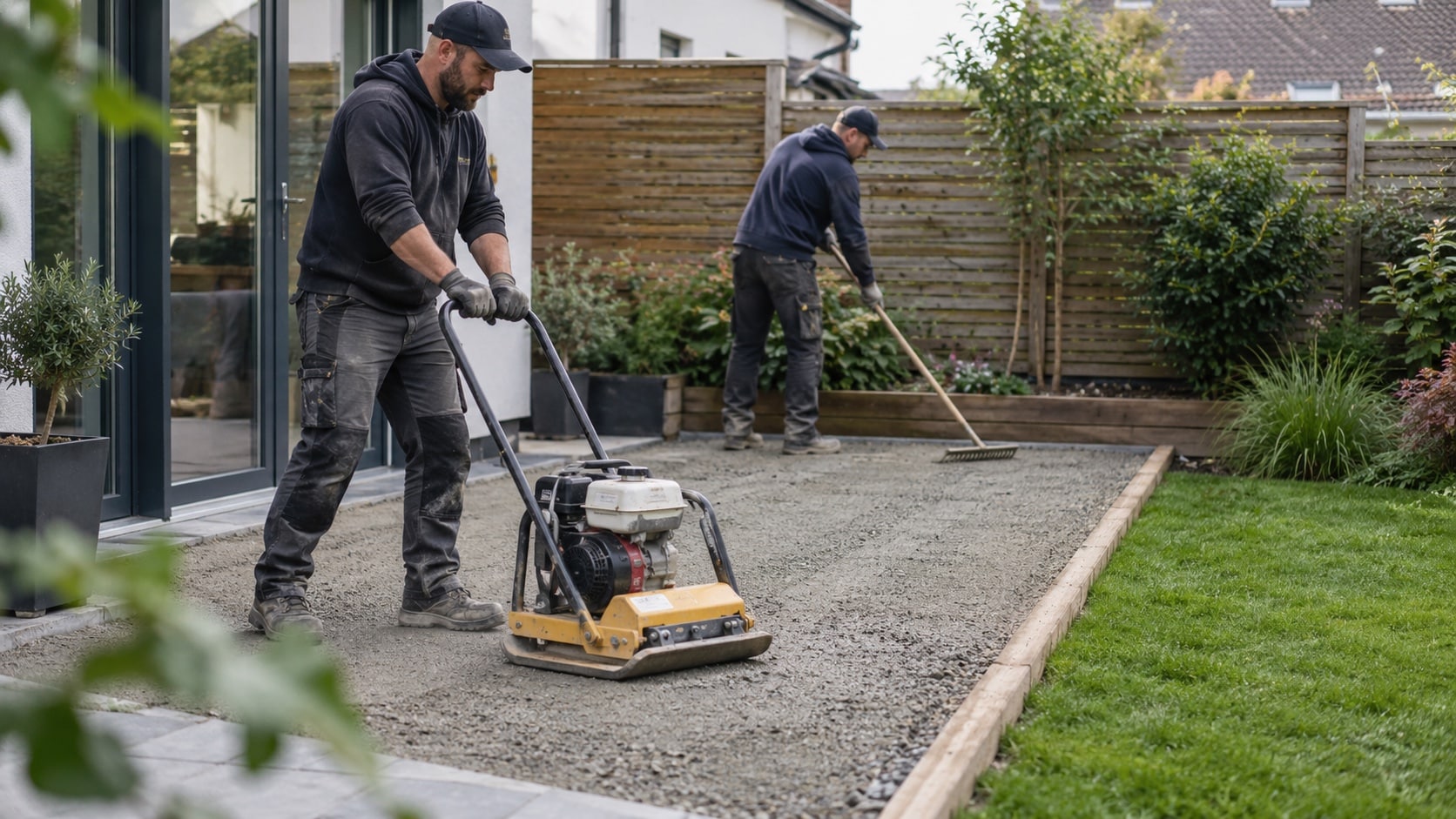
The finished surface depends heavily on what sits underneath it. Installation often involves removing existing grass or material, preparing the ground, forming a stable base, creating suitable levels and securing the turf around the edges.
Poor preparation can lead to dips, visible joins, loose edges or drainage issues. These problems can affect the look of the lawn and create trip hazards in business settings or family yards.
It is also wise to plan surrounding work at the same time. Consider where garden edging, fencing, pet gates, paths, drainage points and outdoor furniture will sit. Making these decisions early can help avoid cutting into the new lawn later.
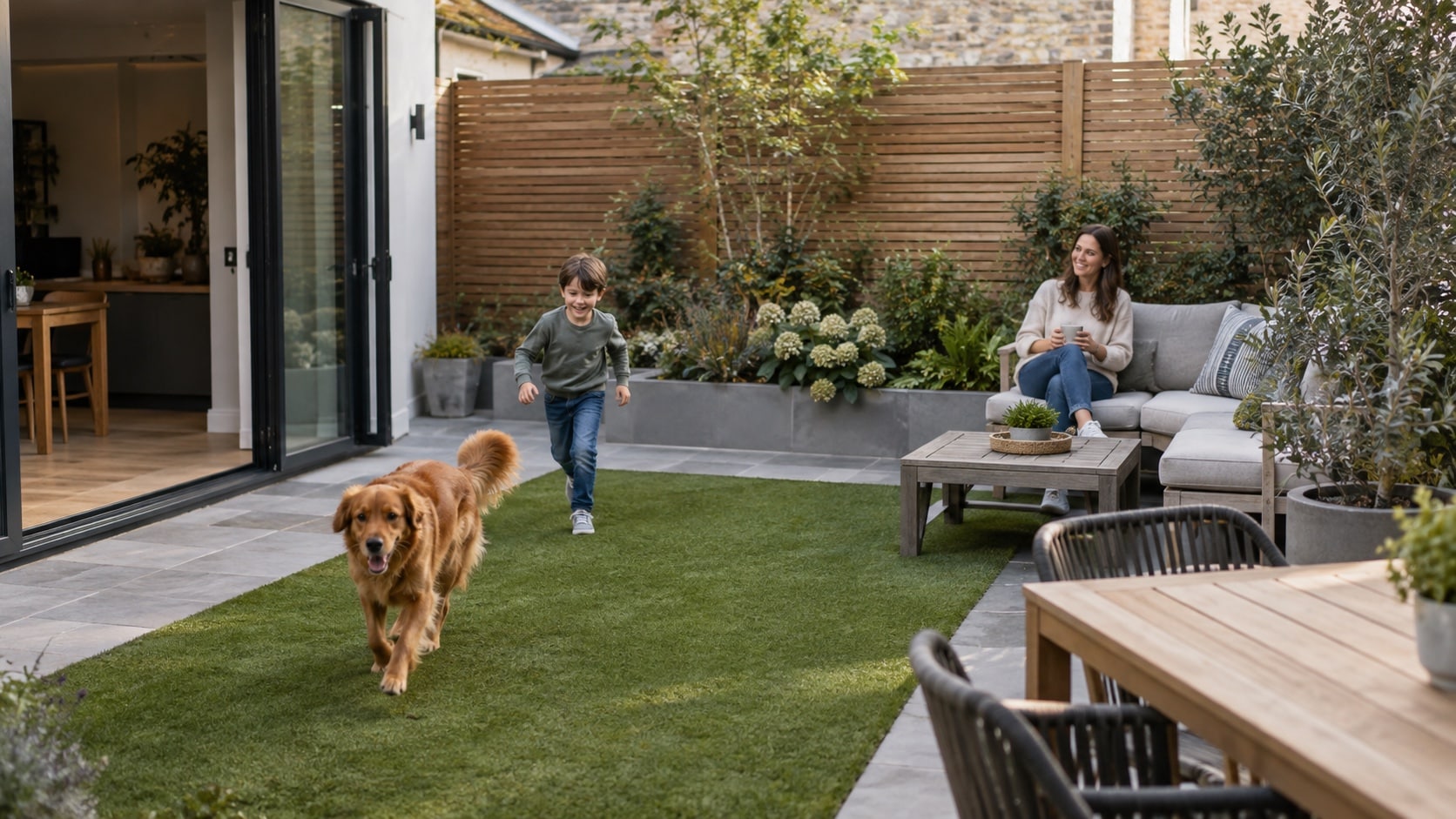
Synthetic lawn can be a practical choice for homes with pets and businesses that want a low-maintenance, tidy outdoor surface. It can reduce mud, remove the need for mowing and provide a reliable green finish in spaces that receive regular use.
The best results come from selecting suitable turf, preparing the base properly and keeping the lawn clean. Speak with an experienced installer about your site, drainage needs and how the area will be used to find a synthetic lawn solution that works for your pets, customers or household.
Pet friendly artificial grass can be suitable for dogs when it is installed correctly and kept clean. Choose a product designed for outdoor use, with drainage that allows water to pass through the surface. Remove waste promptly and rinse high-use areas regularly. As with any outdoor surface, supervise pets, provide shade and water, and check the lawn temperature before use on hot days.
Pet friendly artificial grass should not develop strong odours when waste is removed promptly, the surface is rinsed regularly and drainage works properly. Odours can occur if urine residue builds up, water pools beneath the lawn or the area stays damp due to shade and limited airflow. A regular cleaning routine and suitable base preparation help keep pet spaces fresher.
Dogs may attempt to dig, especially if they are bored, anxious or attracted to a scent beneath the surface. A properly installed synthetic lawn with secure edges and a stable base makes digging more difficult than natural turf. Training, enrichment and supervision are still helpful. If your dog digs frequently, discuss the behaviour and site needs before installation.
Remove solid waste daily, then rinse the affected area with clean water. Clear leaves and loose debris so they do not trap moisture or odours. Brush the turf occasionally to lift flattened fibres and maintain its appearance. Use cleaning products only when they are suitable for synthetic grass and safe for pets. If odours persist, check drainage and cleaning frequency.
Pet friendly artificial grass can suit small backyards because it creates a tidy surface without requiring space for a mower or large garden beds. It can be cut to fit narrow side areas, compact courtyards and pet runs. Good drainage remains necessary, especially in enclosed spaces. Plan shade, pet access and cleaning access before choosing the final layout.