
What Is the Best Way to Create a Comfortable Outdoor Living Area?
Create a comfortable outdoor living area with flexible shade, smart zoning, privacy, airflow, lighting, heating and practical maintenance.


An outdoor area should feel connected to your home, not cut off by dark covers, heavy barriers or awkward boundaries. The right glass features can bring in more daylight, preserve views and make a patio, deck or pool area feel larger without removing the practical protection your family needs.
Glass is not suitable for every location or layout. Privacy, weather exposure, heat, drainage and safety all shape the best result. This guide explains where glass can work well outdoors, what to plan before installation and how to choose a design that remains practical over time.
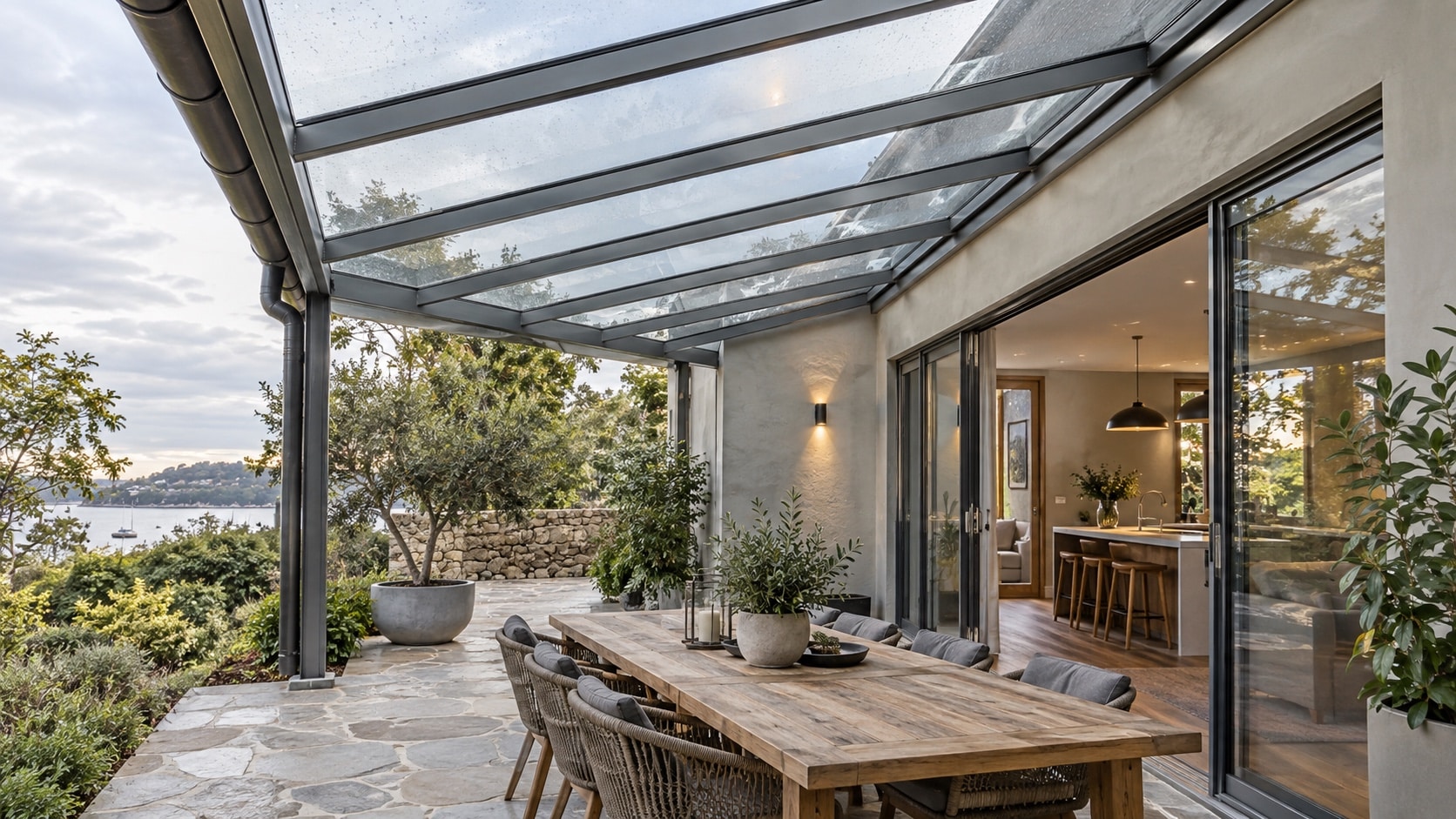
A covered patio can make outdoor living more usable through changing weather, but a solid roof may leave nearby rooms and entertaining areas feeling dim. A glass roof allows daylight to reach the space beneath it while still creating a sheltered area for dining, relaxing or entertaining.
A professionally designed glass roof can suit patios, verandahs, courtyard covers and selected extensions. The design needs to account for the supporting structure, the direction of the sun, roof pitch and drainage so water is carried away safely.
Before choosing a roof design, think about how you use the area throughout the year. A north- or west-facing space may receive intense afternoon sun, while a shaded courtyard may benefit from as much light as possible.
Useful planning questions include:
The glazing choice also affects comfort. Clear glass offers unobstructed light and views, while tinted, coated or laminated options may help manage glare, heat or privacy depending on the design. A site-specific discussion helps prevent a bright outdoor area from becoming uncomfortable during warmer months.
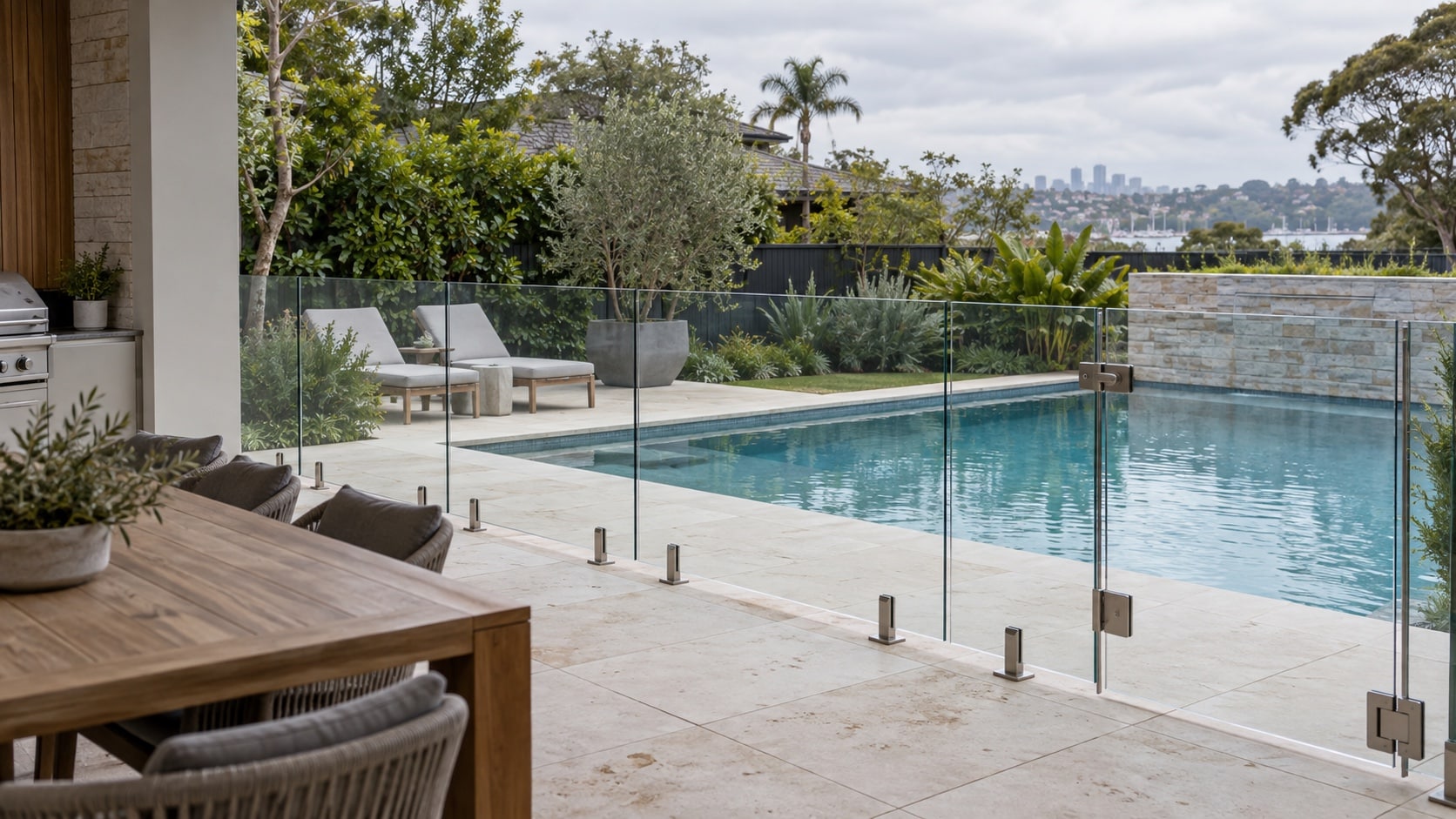
Pool fencing needs to create a secure barrier, yet many homeowners do not want a fence to hide the garden, outdoor kitchen or pool itself. Frameless and semi-frameless glass can maintain clear sightlines across the space while defining a compliant pool zone.
Well-designed glass pool fencing Sydney solutions can make smaller yards feel less enclosed because the barrier does not interrupt the visual flow between the home, entertaining area and pool. This can also make it easier for adults to maintain a clear view of children in the pool area, although active supervision remains necessary.
The appearance of a glass fence depends on more than the panels. Gates, hinges, latches, spigots, posts and surrounding landscaping all affect how the finished area functions. A poorly positioned gate can make access inconvenient, while unsuitable plant placement can create maintenance issues or interfere with safety requirements.
When planning glass fencing around a pool, check:
Pool barrier rules apply to the full installation, not only the glass panels. The final design should meet applicable requirements for your property and be checked before the pool area is used.
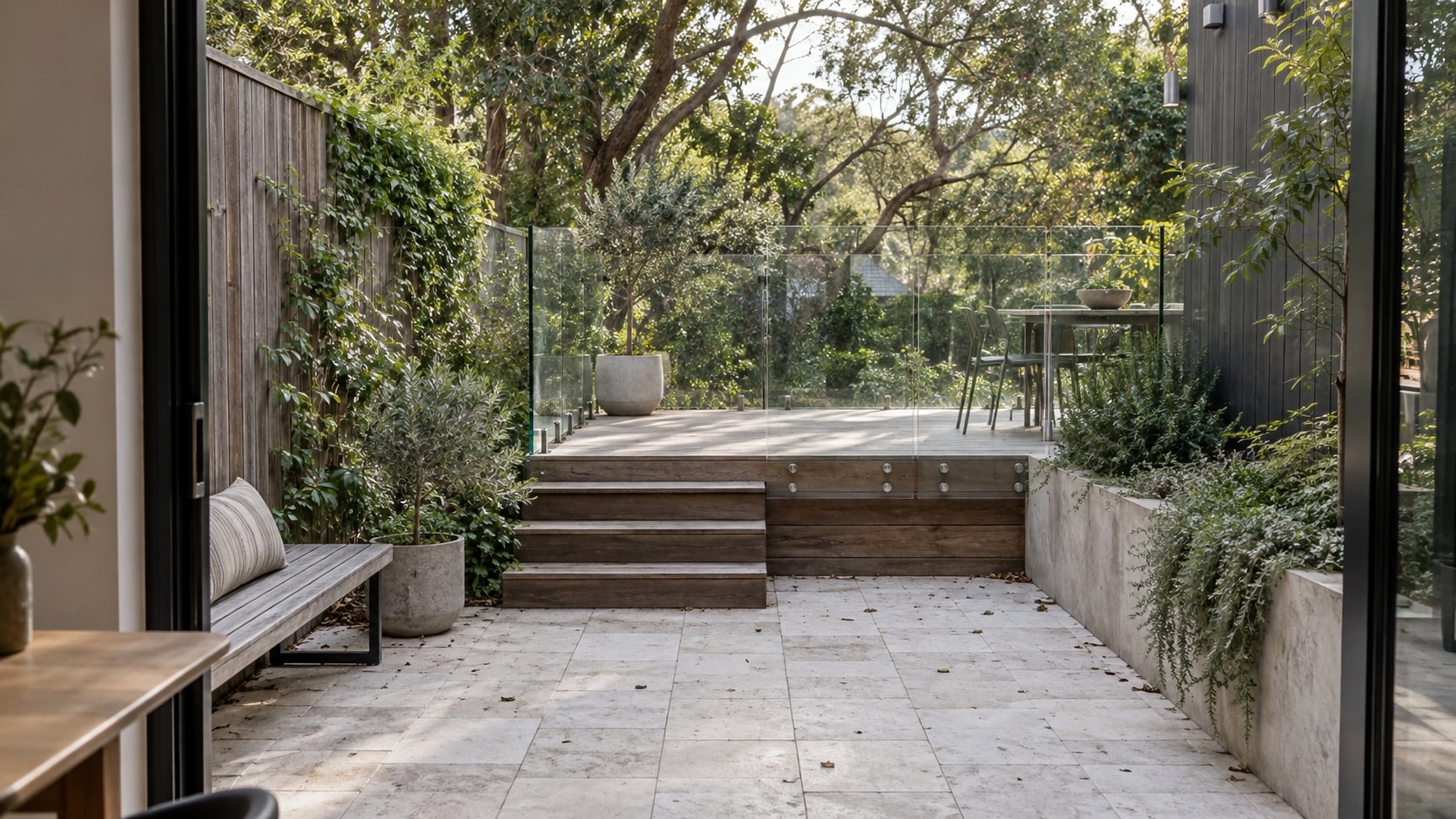
Glass can be particularly effective in courtyards, balconies and compact backyards where solid walls or bulky screens make the area feel narrow. Because it allows the eye to travel beyond the immediate boundary, glass can help maintain a sense of openness.
For example, a glass balustrade on a raised deck may preserve views of the garden instead of placing a solid barrier across them. Glass windbreaks can also provide protection around exposed seating areas without creating a closed-in feel.
The surrounding materials shape the result. Glass often works well with timber decking, stone paving, aluminium framing, rendered walls and modern landscaping. Choosing too many competing finishes can make the space feel busy, so it helps to keep the overall palette simple.
Use glass where it adds a clear benefit, such as:
Glass does not need to dominate every part of the design. Combining it with screening, planting or solid privacy walls can create a more balanced outdoor area.
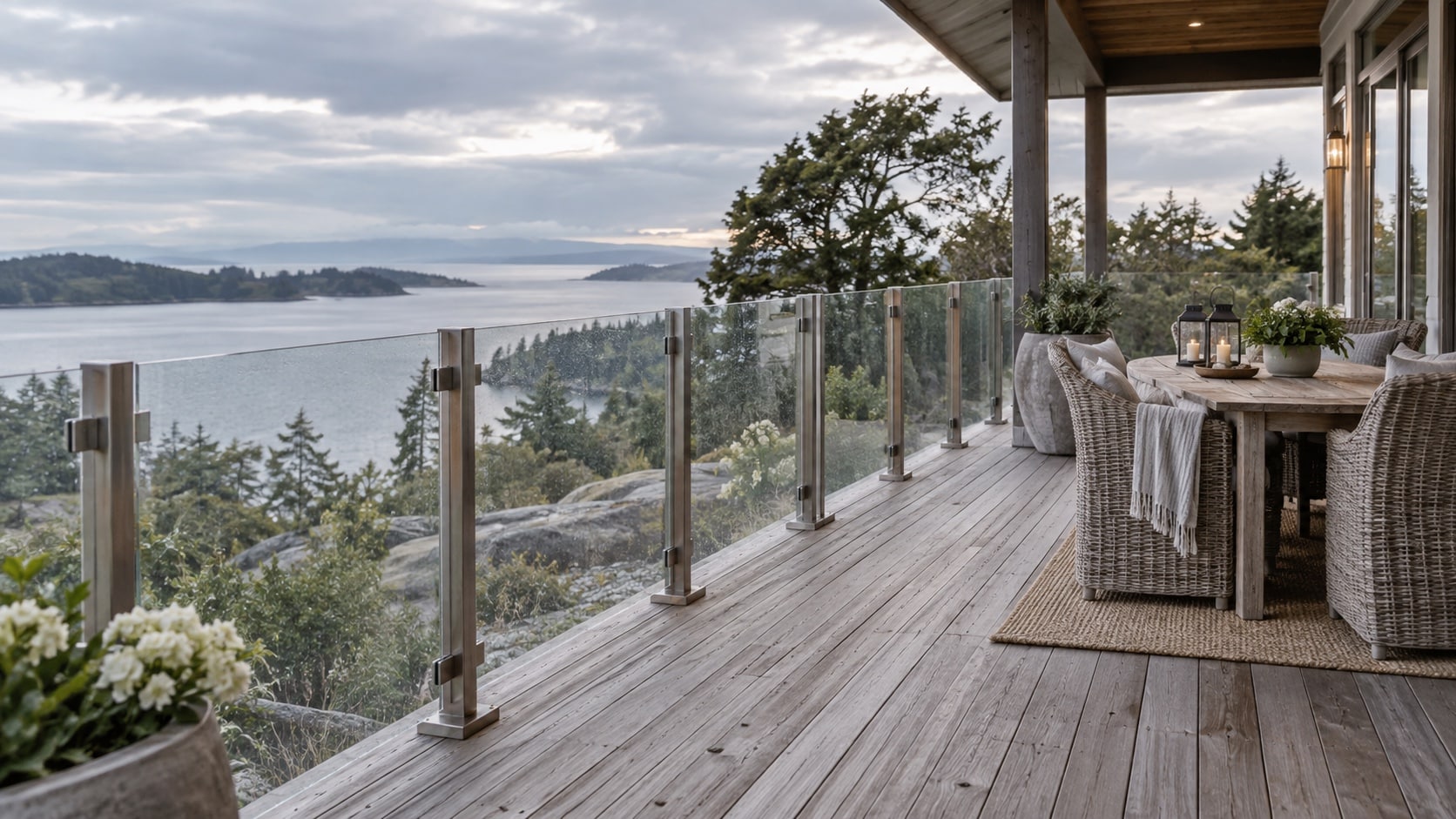
Wind can make an otherwise attractive deck or patio difficult to enjoy. Fixed glass panels can act as a windbreak around selected parts of an outdoor area, such as beside a dining setting, lounge zone or balcony edge.
Placement matters. A panel that blocks wind from one direction may offer limited protection if the site receives gusts from several angles. Looking at prevailing weather patterns, neighbouring structures and openings around the home helps identify where wind enters the space.
Glass windbreaks should be designed as part of the wider structure rather than added as an afterthought. The fixing method, panel thickness, edge protection and support system need to suit the exposure level and location.
A practical layout may include glass on the most exposed side while leaving other areas open for airflow. This can make the space more comfortable without trapping heat or making the outdoor area feel enclosed.
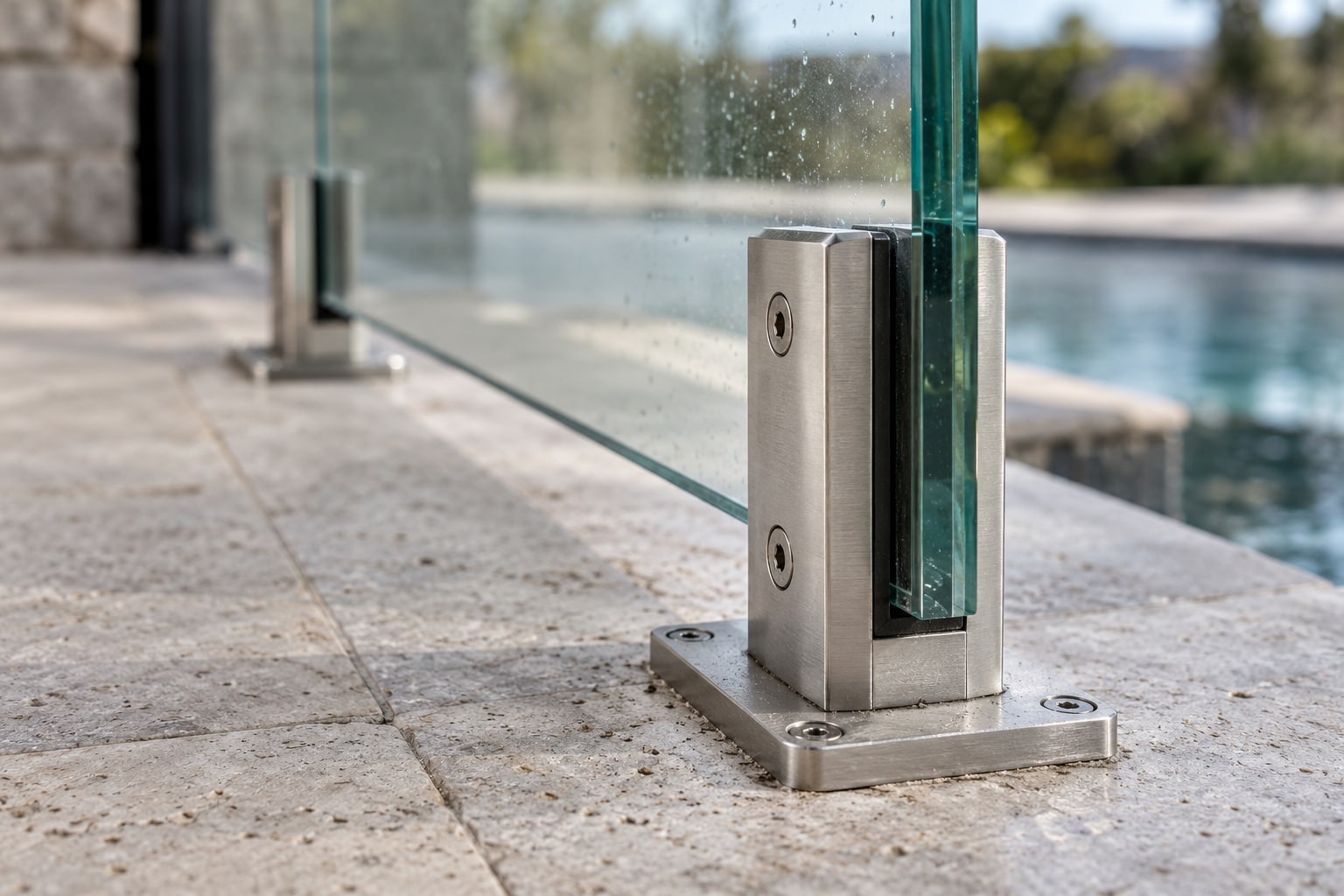
Outdoor glass features need more than an attractive appearance. They must be made from glass and hardware suited to the installation type, location and expected conditions. Safety glass is commonly used for outdoor applications because it is designed to perform differently from ordinary glass if it breaks.
The supporting hardware also deserves close attention. Coastal locations, exposed sites and pool areas can place extra pressure on fittings due to moisture, salt, wind and regular use. Selecting hardware designed for the conditions can help reduce premature wear and staining.
Ask your installer about:
Avoid treating glass as a DIY material for structural, elevated or pool-related applications. Incorrect measurements, unsuitable fixings or poor installation can create safety risks and costly rectification work.
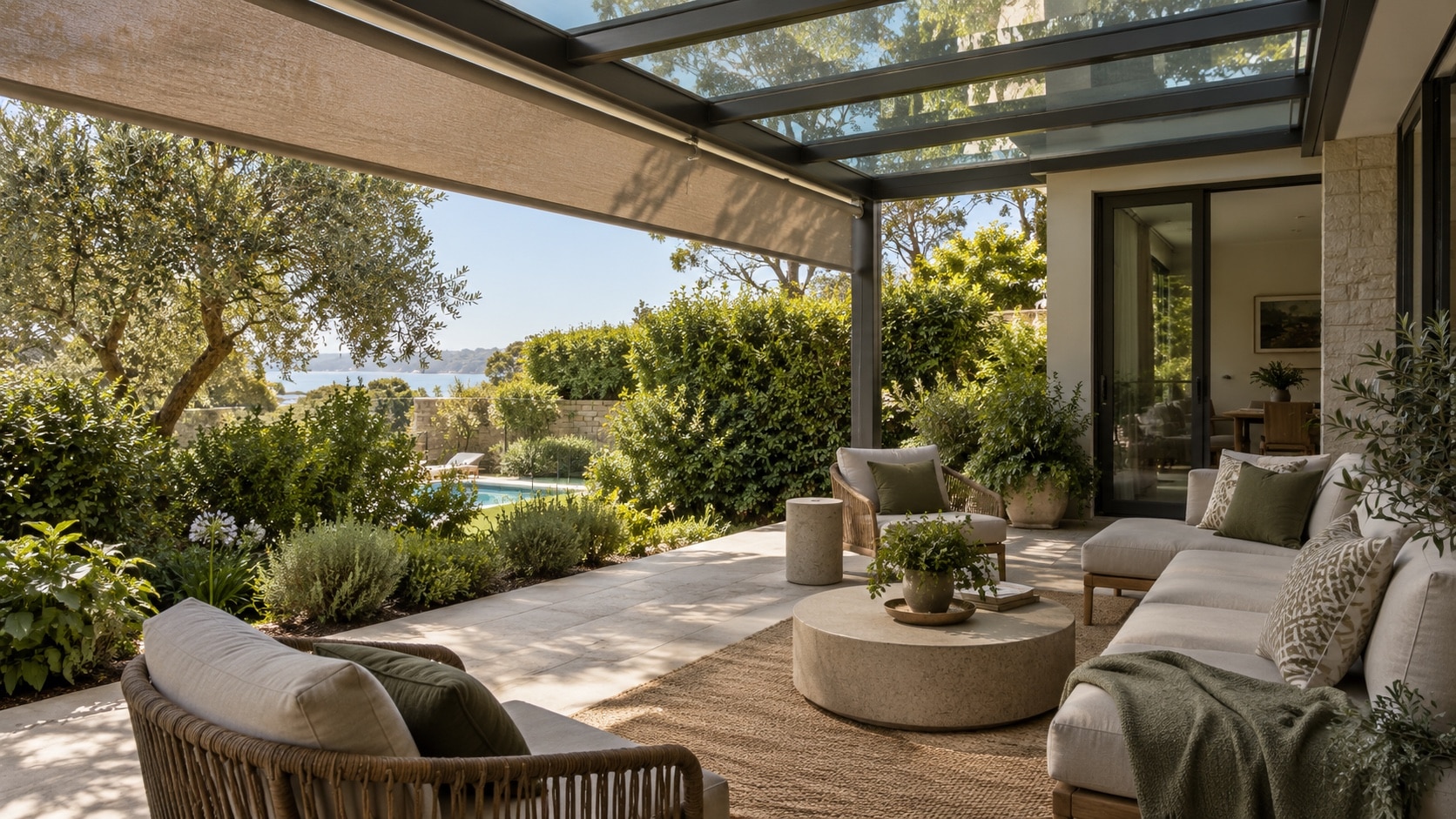
More natural light can improve an outdoor area, but too much direct sun may create glare and heat. This is especially relevant for glass roofing above west-facing patios or outdoor entertaining areas used during the afternoon.
The best approach depends on the orientation of the home, the amount of shade from nearby buildings or trees and how the outdoor area is used. A bright courtyard may need privacy screening, while a darker patio may benefit from clear overhead glazing.
You may be able to balance these needs through a combination of design choices:
Privacy should be planned early. Clear glass may expose parts of a yard to neighbours, particularly on elevated decks or closely built properties. Screening, planting and carefully positioned solid sections can provide privacy while retaining light and openness.
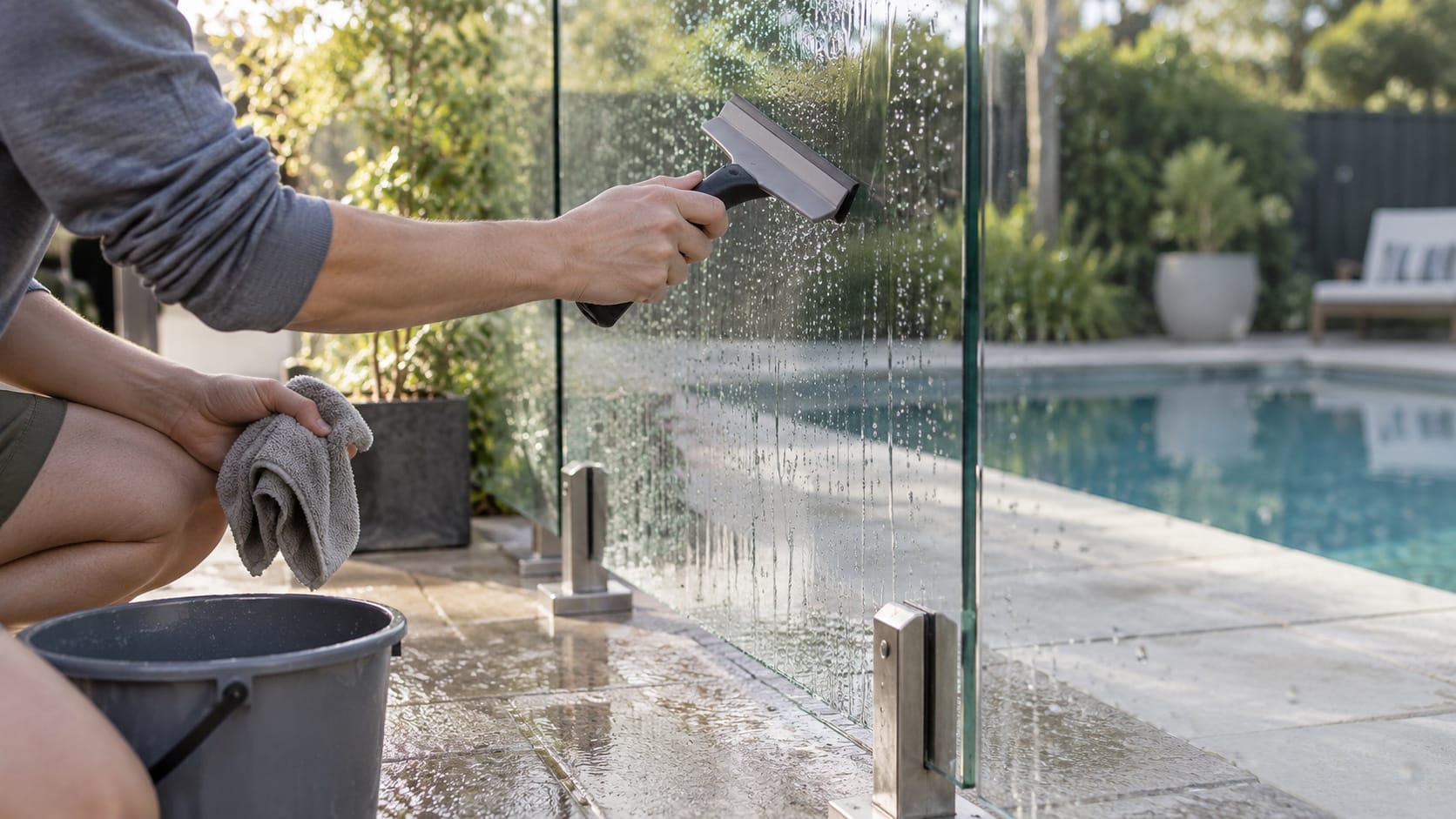
Glass is relatively simple to maintain, but it still needs regular care. Dust, pollen, rain marks, salt spray and pool chemicals can leave marks on panels if they build up over time.
A basic cleaning routine often includes rinsing loose dirt away, using a mild glass-safe cleaner and wiping the surface with a soft cloth or squeegee. Avoid abrasive pads, harsh chemicals and metal scrapers that may damage glass surfaces or nearby hardware.
Hardware should also be checked from time to time. Look for loose fittings, damaged seals, stiff gates, water pooling and changes in how panels sit within their supports. Addressing small issues early can help protect the appearance and performance of the installation.
For pool fencing, keep the gate latch working correctly and make sure furniture, pots, tools and other objects are not placed where they could create a climbing point near the barrier.

A successful glass feature starts with a clear plan. Measurements, surface levels, access, drainage and the condition of the existing structure all influence what can be installed safely.
It also helps to think ahead. If you plan to add a pergola, outdoor kitchen, decking, landscaping or new paving later, include those plans in the early design stage. This can prevent clashes between glass panels, drainage points, gates and future building work.
A professional site assessment can identify issues that are difficult to spot from plans alone, including uneven ground, roof-water paths, structural limitations and access challenges. It gives you a clearer picture of what will work for your outdoor living area before installation begins.
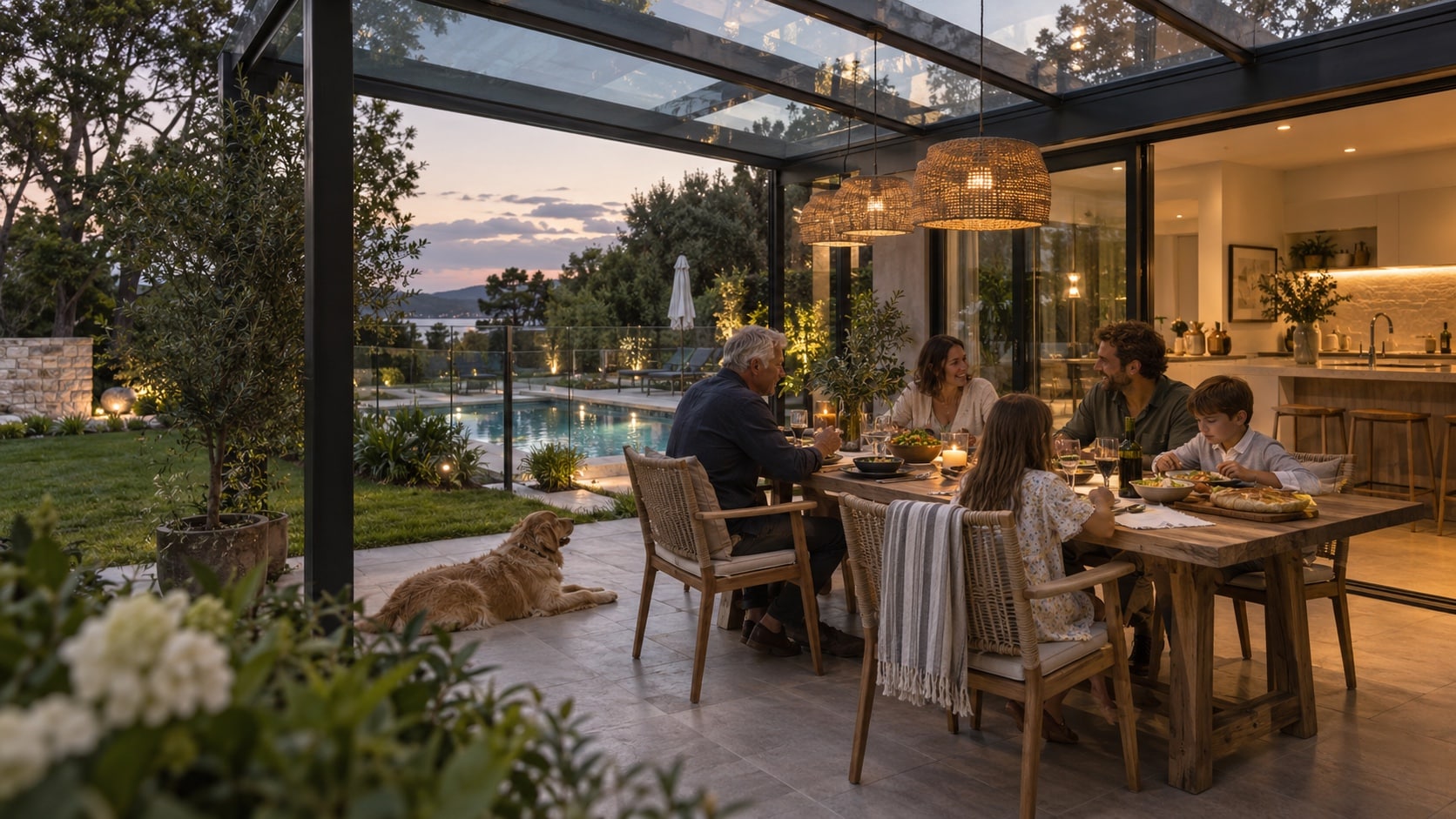
Glass features can help outdoor areas feel brighter, more open and more connected to the rest of the home. Whether you are adding cover above a patio, protecting a deck from wind or enclosing a pool safely, the strongest result comes from a design that suits the site and daily use of the space.
Choose glass features that support your lifestyle, manage weather conditions and meet the safety needs of the installation. Speak with an experienced glass professional to discuss a design that brings more comfort, light and usable space to your outdoor area.
A glass roof can suit an outdoor patio when the supporting structure, drainage and glazing selection are designed for the site. It allows natural light into the covered space while offering protection from rain. The direction of the sun also matters, as some patios may need added shade or heat-control glazing. A professional assessment can confirm whether the existing structure is suitable.
A glass roof can increase warmth and glare if it is installed without planning for the property’s orientation and sun exposure. This can be managed through the roof design, glazing choice, partial shading and ventilation around the outdoor area. West-facing patios often need extra thought because they receive strong afternoon sun. The aim is to gain daylight without making the space uncomfortable.
Clean a glass roof using a gentle glass-safe cleaner, clean water and a soft cloth, mop or suitable squeegee. Remove loose debris first so it does not scratch the surface during cleaning. Avoid abrasive pads, strong chemicals and tools that can damage glazing, seals or nearby fittings. For difficult-to-reach roof sections, arrange professional cleaning rather than working unsafely at height.
A glass roof may be installed over an existing deck if the supporting framework and footings can safely carry the additional load. The deck’s condition, drainage, attachment points and local approval requirements may all affect the design. An installer should inspect the area before recommending a system. Adding a roof without checking the structure can lead to movement, leaks or expensive alterations.
A glass roof benefits from regular cleaning and occasional checks of the surrounding framework, seals, drainage paths and fixings. Leaves and debris should be removed so water can flow away as intended. Cleaning frequency depends on the site, especially near trees, busy roads, pools or coastal areas. Promptly addressing leaks, loose fittings or damaged seals helps maintain the roof’s safety and appearance.


