Unlock Warmth & Style: Casual Layering Clothes for Winter Done Right

Stylish winter outfits collage: coats, scarves, and accessories in urban and snowy settings. Fashionable cold-weather looks.

Winter’s chill can be a real style killer if you let it. We’ve all been there: bundled up so much you look like a marshmallow, or sacrificing warmth for a fleeting moment of fashion. But what if you could have both? What if you could step out into the frosty air feeling cozy, looking chic, and ready for whatever the day throws at you? That’s the magic of layering clothes for winter. It’s an art form, a practical skill, and a fashion statement all rolled into one. Done right, layering transforms your winter wardrobe from bulky to brilliant, allowing you to adapt to fluctuating temperatures, express your personal style, and genuinely enjoy the colder months. Forget the dread of venturing outside; with a smart layering strategy, winter becomes an opportunity to experiment with textures, colors, and silhouettes, creating outfits that are as warm as they are visually interesting. Let’s dive into how you can unlock this warmth and style, casually and effortlessly.

The Genius of the Layered Approach

Woman in winter coat and earmuffs holding coffee outdoors in snowy urban landscape.
Fashionable woman in cozy beige coat holding coffee, with stylish bag, standing against a stone wall.
Woman in a gray coat and beanie stands outside a building, enjoying a sunny winter day. Cozy and stylish winter fashion.

At its heart, layering is about creating multiple pockets of air between fabric layers. These air pockets act as insulators, trapping your body heat and preventing it from escaping. It’s a much more effective way to stay warm than simply piling on one thick, heavy item. Think of it like a series of mini-insulating blankets wrapped around you. Beyond just warmth, layering offers incredible adaptability. You can easily add or shed a layer as you move from a chilly outdoor walk to a heated indoor space, ensuring you’re comfortable no matter the environment. This flexibility is key to mastering winter style without overheating or freezing.

But it’s not just about practicality. Layering also opens up a world of stylistic possibilities. Each layer is an opportunity to introduce a new texture, a complementary color, or an interesting pattern. It adds depth and dimension to your outfit, making it look more thoughtful and put-together. Instead of a single, flat look, you create a dynamic ensemble that tells a story. This approach is particularly effective for casual winter wear, where comfort often takes precedence, but style doesn’t have to be left behind.

ProsCons
– Superior warmth retention due to trapped air.– Can become bulky if not done strategically.
– Incredible adaptability to changing temperatures.– Requires more clothing items, potentially increasing laundry.
– Adds depth and visual interest to outfits.– Improper material choices can lead to discomfort (e.g., sweating).
– Extends the use of seasonal clothing items.– Might take a bit more time to plan outfits.
– Allows for versatile style expression.– Some layers might feel restrictive if too tight.

The Foundation: Building Your Winter Wardrobe with Smart Layers

Stylish woman in beige coat and sweater taking a selfie with black quilted handbag in modern interior.
Woman in winter coat and beanie enjoying snowy forest view from wooden terrace.
Woman in stylish faux fur coat and sunglasses standing outdoors on a sunny day, showcasing fashion and elegance.

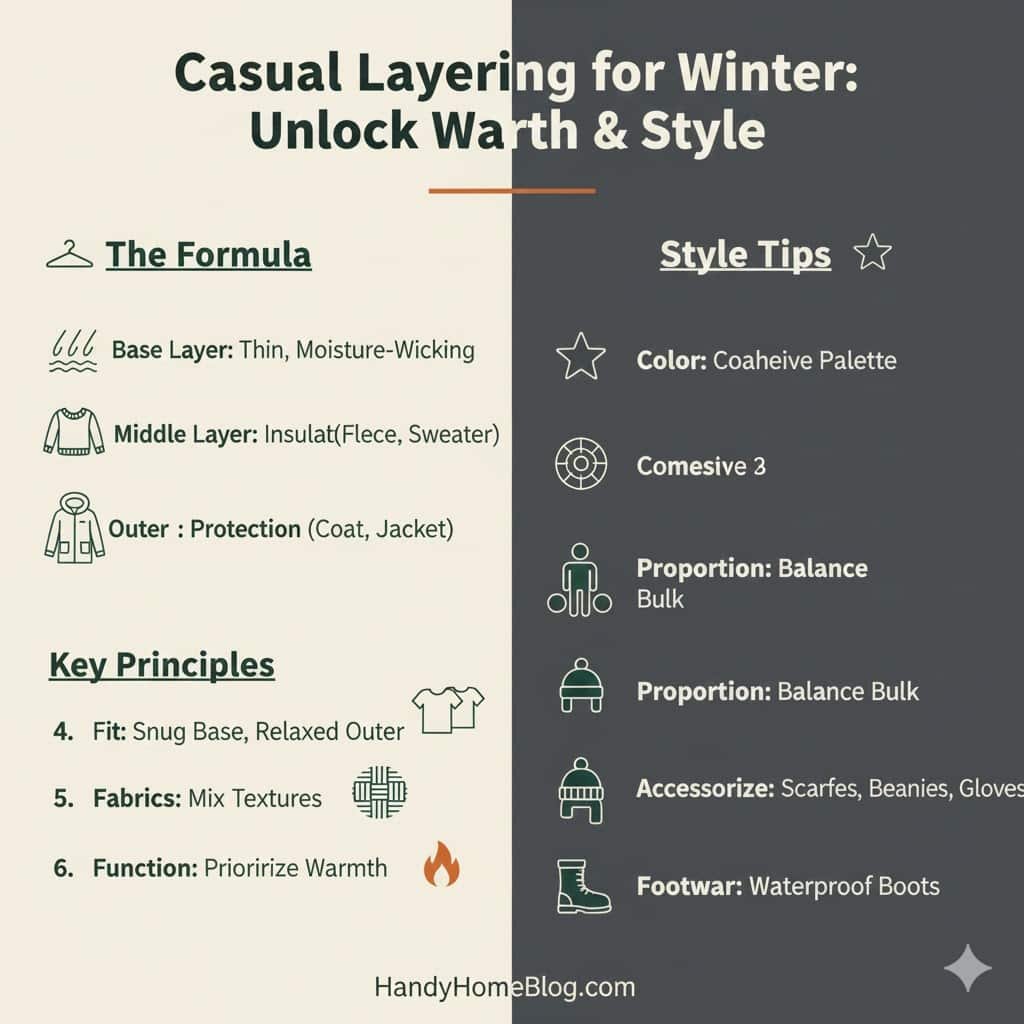
To master casual layering, you need to understand the fundamental components. We typically break it down into a three-layer system: base, mid, and outer. However, sometimes you might use more or fewer layers depending on the weather and your activity level.

The Base Layer: Your Second Skin

The base layer is the closest to your skin, and its primary job isn’t necessarily to add bulk, but to manage moisture. When you get active, you sweat. If that sweat stays on your skin, it cools you down rapidly, making you feel cold even if you’re wearing heavy clothes. A good base layer wicks moisture away from your skin, transferring it to the outer layers where it can evaporate.

  • Materials Matter:
    • Merino Wool: This is a superstar for a reason. Merino wool is incredibly soft, naturally wicks moisture, regulates temperature (keeping you warm when it’s cold and cool when it’s warmer), and is naturally odor-resistant. It’s an investment, but a worthwhile one.
    • Synthetics (Polyester, Polypropylene): These are great alternatives to wool. They wick moisture effectively, dry quickly, and are usually more budget-friendly. Modern synthetics can be surprisingly soft and comfortable.
    • Silk: A luxurious option, silk is warm, lightweight, and very soft. It’s less durable than wool or synthetics for high-activity use, but excellent for everyday comfort.
    • Avoid Cotton: While comfy for everyday, cotton is a layering enemy in cold weather. It absorbs moisture and holds onto it, cooling your body as it evaporates. This can quickly lead to hypothermia in extreme cold.
  • Fit is Key: Your base layer should be snug but not restrictive. It needs to be in close contact with your skin to effectively wick away moisture. Think thermal long-sleeve tops and leggings or long johns.

The Mid-Layer: The Insulation Powerhouse

Stylish woman in a coat and boots with a handbag, standing outdoors by columns, exuding chic autumn fashion.
Stylish woman in brown winter attire sitting at a Parisian cafe with Eiffel Tower view. Fashionable street scene in Paris.
Stylish woman in winter attire enjoys coffee outdoors, wearing sunglasses, headband, and gloves, sitting on a bench near a cafe.

This is where the real warmth comes in. The mid-layer’s job is to trap air and provide insulation. It’s what keeps your body heat from escaping and the cold from getting in. This layer is often the one you adjust most frequently throughout the day.

  • Material Options for Maximum Warmth:
    • Fleece: Lightweight, soft, and excellent at trapping heat. Fleece comes in various weights (light, medium, heavy) and is a casual layering staple.
    • Wool Sweaters: From chunky knits to fine merino pullovers, wool sweaters offer superb warmth and a classic look. Options like lambswool, alpaca, or cashmere add varying degrees of softness and luxury.
    • Down or Synthetic Insulated Vests/Jackets: For serious warmth without excessive bulk, a lightweight down or synthetic fill vest or jacket can be an amazing mid-layer. They compress well and are surprisingly warm.
  • Styling the Mid-Layer: This is where you can really play with your aesthetic.
    • Cardigans: Versatile and easy to add or remove. A chunky knit cardigan over a base layer tee adds immediate warmth and visual appeal.
    • Pullovers: Sweaters, hoodies, or half-zip fleeces are classic mid-layer choices.
    • Flannel Shirts: A thick flannel shirt can double as a stylish mid-layer, especially when worn open over a base tee or buttoned up.
    • Fit: It should be comfortable enough to wear over your base layer without feeling tight, allowing for freedom of movement. You don’t want it so baggy that it creates too much dead air space, but not so snug it compresses the insulation.

The Outer Layer: Your Protective Shield

Cozy winter cabin scene with a person in warm sweater and vest near a fireplace, snowy forest view outside.

The outermost layer is your defense against the elements: wind, rain, and snow. It needs to be durable, protective, and ideally, stylish enough to be the focal point of your outfit when you’re outdoors.

  • Choosing the Right Shell:
    • Waterproof/Water-Resistant: Look for materials like Gore-Tex, HyVent, or other treated fabrics that shed water. For casual wear, water-resistant options are often sufficient, especially if you’re not expecting a downpour.
    • Windproof: Even on a dry day, biting winds can cut through layers. A good outer layer will block the wind, keeping your trapped warmth intact.
    • Insulated vs. Shell: Some outer layers come with built-in insulation (e.g., down parkas), while others are just a protective shell. For casual layering, a simple shell allows for more flexibility with your mid-layers. If it’s truly freezing, an insulated parka is the way to go.
  • Fit Considerations: Your outer layer should be roomy enough to comfortably fit over all your base and mid-layers without compressing them, which would reduce their insulating power. However, it shouldn’t be so loose that it looks sloppy or allows too much cold air to circulate inside.
  • Casual Outerwear Examples:
    • Parkas: The ultimate winter warrior, often insulated and extending past the waist for extra coverage.
    • Puffer Jackets: Lightweight yet incredibly warm due to down or synthetic fill, they come in various styles from sleek to oversized.
    • Wool Coats: A classic, stylish option that offers excellent warmth and wind protection, especially in heavier weights.
    • Trench Coats (with removable lining): A versatile option for less extreme cold, especially if it has a warm, removable liner.
    • For cold weather travel, a well-chosen outer layer is paramount. Make sure to check out tips for a winter travel packing list to ensure you’re fully prepared.

The Supporting Cast: Accessories for Complete Warmth and Style

Fashionable woman in beige shearling coat, jeans, and cream boots takes mirror selfie in chic, modern living room.
Stylish woman in a cozy white fur coat and brown boots walking past a café on a cool day.
Woman in snowy forest holding hot drinks, wearing gray coat, white scarf, and earmuffs, embracing winter fashion and nature.

Don’t underestimate the power of accessories. They’re not just add-ons; they’re essential components of a well-layered winter outfit, preventing heat loss from exposed areas and adding significant style points.

Headwear: Keeping Your Brain Warm

A significant amount of body heat can escape through your head. Covering it is a simple yet effective way to stay warmer.

  • Beanies: The quintessential casual winter hat. Available in wool, fleece, or synthetic blends, they come in endless colors and knits. A slouchy beanie adds a relaxed vibe, while a fitted one can be more sleek.
  • Wool Hats: More structured wool hats (like fedoras or wide-brimmed styles) can add a touch of sophistication to a casual layered look.
  • Ear Warmers/Headbands: If you prefer to leave your hair uncovered but need ear protection, these are a great option.

Neckwear: The Cozy Embrace

A scarf is not just a fashion accessory; it’s a vital piece of insulation that protects a vulnerable area from the cold wind.

  • Chunky Knit Scarves: Perfect for adding volume and texture. They can be wrapped multiple times for maximum warmth.
  • Infinity Scarves: A continuous loop that’s easy to style and ensures no loose ends to flap in the wind.
  • Pashminas/Shawls: Can be draped elegantly over an outfit for extra warmth and a touch of luxury.
  • Styling Tip: A brightly colored scarf can be the pop of color an otherwise neutral outfit needs. It’s a fantastic way to experiment with your palette.

Handwear: Protecting Your Digits

Frozen fingers are no fun. Good gloves or mittens are non-negotiable for cold weather.

  • Gloves: Offer more dexterity, ideal for tasks like using your phone or handling keys. Look for options with touch-screen compatibility.
  • Mittens: Generally warmer than gloves because your fingers share warmth. Great for truly frigid temperatures.
  • Materials: Wool, fleece, and insulated synthetics are common choices. Leather gloves can add a sophisticated touch.

Footwear: From the Ground Up

Cozy gray knit scarf and gloves on wooden table, perfect for winter warmth. Nearby, hot coffee and hiking boots complete the scene.

Your feet are often the first to get cold. Proper footwear and socks are crucial for overall warmth and comfort.

  • Socks:
    • Wool Socks (Merino): Like base layers, merino wool socks wick moisture, regulate temperature, and provide excellent insulation without being overly bulky.
    • Synthetic Thermal Socks: Another great option for warmth and moisture management.
    • Avoid Cotton Socks: Again, cotton holds moisture and will leave your feet cold and damp.
  • Boots:
    • Waterproof/Water-Resistant: Essential for slush, snow, and rain. Look for sealed seams and waterproof membranes.
    • Insulated: For truly cold conditions, insulated boots with ratings (e.g., rated to -20°C) will keep your feet toasty.
    • Traction: Good grip on the soles is important for icy or snowy surfaces.
    • Style: From rugged hiking boots to sleek Chelsea boots or cozy Uggs, choose a style that fits your casual aesthetic and lifestyle.

Mastering the Style: Tips for Casual Winter Layering Done Right

Woman in cozy white coat and hat, standing outside a building with a tan handbag, embracing winter fashion style.
Woman in cozy winter outfit holding a coffee in front of a colorful carousel in a festive outdoor market setting.
Woman in stylish winter attire stands outdoors, wearing a cozy jacket and beanie, surrounded by festive decorations.

Layering isn’t just about warmth; it’s about looking good while staying cozy. Here are some tips to elevate your casual winter layering game.

Play with Textures

Combining different textures adds depth and visual interest to your outfit. Think:

  • A smooth silk base layer under a soft fleece mid-layer, topped with a textured wool coat.
  • A chunky knit sweater over a crisp cotton (non-base layer!) shirt.
  • Corduroy pants with a fuzzy shearling-lined jacket.

The contrast makes each piece stand out and creates a more dynamic look.

Color Coordination and Contrast

While all-black is always chic, winter is a great time to experiment with color.

  • Monochromatic Tones: Stick to different shades of the same color (e.g., various greens, blues, or browns) for a sophisticated, cohesive look. You can find inspiration in exploring chocolate brown essentials for an autumn look, which can easily translate to winter.
  • Complementary Colors: Use colors opposite each other on the color wheel (e.g., navy and orange, burgundy and olive) for a bolder, more eye-catching effect.
  • Pop of Color: Keep most layers neutral (grays, blacks, creams, navies) and add a vibrant scarf, hat, or even a brightly colored mid-layer for a playful touch.
  • Neutrals: Black, white, gray, beige, and navy form an excellent foundation for any layered look, as they mix and match effortlessly.

Balance Proportions

Layering can quickly lead to a bulky silhouette if you’re not careful. The key is to balance proportions.

  • Slim Base, Roomier Mid, Structured Outer: Start with a close-fitting base, then a slightly looser mid-layer, and finish with an outer layer that provides shape.
  • Bulky Top, Slim Bottom: If you’re wearing an oversized sweater or a puffer jacket, pair it with slimmer pants (like skinny jeans or leggings) to avoid looking overwhelmed.
  • A-Line or Oversized Outerwear: These can look fantastic over multiple layers, providing a fashionable, relaxed silhouette.

The “Peek-a-Boo” Effect

Let your layers show! This is where the style truly comes alive.

  • Collars and Cuffs: Let the collar of your button-down shirt peek out from under a sweater, or let the cuffs extend slightly.
  • Hemlines: Allow the hem of a longer base layer or a shirt to show below a shorter sweater or jacket. This adds visual length and interest.
  • Open Fronts: Wear a cardigan or an unzipped jacket to reveal the layers beneath.

Accessorize Thoughtfully

Stylish man in a winter outfit walks down a cobblestone street, wearing a camel coat, knit sweater, beanie, and scarf.

Beyond warmth, accessories are your secret weapon for casual winter style.

  • Belts: Cinch a belt over a chunky knit cardigan or even a lightweight jacket to define your waist and add structure to an otherwise relaxed look.
  • Jewelry: Simple necklaces or statement earrings can elevate a casual sweater.
  • Bags: A stylish cross-body bag or a functional tote can complete your ensemble.
  • Consider personalizing your clothes. If you’re feeling crafty, you can even decorate your clothes with floral embroidery to add a unique touch to your winter wardrobe.

Layering for Different Casual Scenarios

Woman in winter attire sits on snowy park bench with hot drink, urban buildings in background.
Woman with stylish braid holding flowers, wearing black coat in snowy setting, standing by ornate building. Winter fashion elegance.
Fashionable woman in a chic black coat, jeans, and boots, holding a designer bag, stands confidently outside a wooden door.

Layering isn’t a one-size-fits-all solution. Your approach will vary depending on your activity and destination.

Everyday Errands and Coffee Runs

For those days when you’re mostly indoors but popping outside, you need flexibility.

  • Base: A long-sleeve tee or light thermal.
  • Mid: A cozy fleece or a stylish cardigan.
  • Outer: A puffer vest, a lightweight insulated jacket, or a wool shacket.
  • Accessories: A beanie and a simple scarf you can easily take off.
  • Footwear: Casual sneakers (weather permitting) or ankle boots.
  • Example: Dark wash jeans, a merino long-sleeve tee, a chunky knit cardigan, and a stylish trench coat. Add a colorful wool beanie and a matching scarf.

Outdoor Strolls or Light Winter Walks

When you’re actively spending time outdoors but not engaging in strenuous activity, focus on robust insulation and weather protection.

  • Base: A medium-weight thermal top and bottoms.
  • Mid: A thicker fleece jacket or a wool sweater.
  • Outer: A waterproof/windproof parka or an insulated jacket.
  • Accessories: Warm gloves or mittens, a heavy-knit beanie, and a substantial wool scarf.
  • Footwear: Waterproof, insulated boots with good traction, paired with thick wool socks.
  • Example: Thermal leggings under waterproof hiking pants, a merino base top, a fleece zip-up, and a waterproof, insulated parka. Finish with waterproof boots, wool socks, insulated gloves, and a fleece-lined beanie.

Cozy Indoor Gatherings (with potential outdoor elements)

Man walking in snowy winter park, wearing a warm coat, hat, scarf, and boots, enjoying the serene, snow-covered landscape.

If you’re going to a friend’s house or a casual restaurant, you want to be warm on the way but comfortable indoors.

  • Base: A fashionable long-sleeve top (e.g., a slim-fit knit or a silk blend).
  • Mid: A stylish wool or cashmere sweater, or a collared shirt under a V-neck sweater.
  • Outer: A chic wool coat or an elegant peacoat that can be easily removed.
  • Accessories: A fashionable scarf you can drape over your shoulders indoors, delicate gloves.
  • Footwear: Stylish ankle boots or dressier loafers.
  • Example: Dark jeans, a silk-blend mock neck top, a cashmere crew neck sweater, and a tailored wool coat. Add a lightweight patterned scarf and leather gloves. After a long day out, a well-layered outfit is perfect for settling into cozy evening routines.

Maintaining Your Winter Layers

Organized wooden closet with hanging jackets and neatly stacked knit sweaters in various colors on labeled shelves.

Proper care extends the life of your layered wardrobe and ensures they perform their best season after season.

  • Read Care Labels: This is the golden rule. Different materials require different care.
  • Merino Wool: Often machine washable on a delicate cycle with cold water and a wool-specific detergent. Lay flat to dry to prevent stretching.
  • Synthetics: Generally easy to care for, machine wash cold, tumble dry low. Avoid excessive heat which can damage fibers.
  • Fleece: Wash cold, tumble dry low to prevent pilling and preserve softness.
  • Down Jackets: Typically require specialized washing or professional dry cleaning. Always follow the manufacturer’s instructions to avoid clumping of the down.
  • Outer Shells: Wash according to label. You might need to re-apply a DWR (Durable Water Repellent) treatment periodically to maintain waterproofing.
  • Storage: When the season ends, clean all items thoroughly before storing. Use breathable garment bags for coats and sweaters to protect them from dust and pests. Avoid hanging heavy knits, as they can stretch; fold them instead.

Wrap Up Your Warmth and Style

Mastering casual layering clothes for winter is a game-changer. It’s about more than just staying warm; it’s about creating a dynamic, adaptable, and stylish wardrobe that allows you to embrace the colder months with confidence and comfort. By understanding the roles of base, mid, and outer layers, choosing the right materials, and thoughtfully incorporating accessories, you transform how you experience winter.

Remember to experiment with textures, play with colors, and always prioritize functionality alongside fashion. Don’t be afraid to try new combinations and find what works best for your personal style and local climate. With these tips in your arsenal, you’re not just dressing for winter; you’re owning winter, one cozy, stylish layer at a time. So go ahead, layer up, step out, and enjoy every crisp, beautiful moment the season has to offer.

author avatar
Arina Editor
I'm Arina, writer with a passion for art, teaching, technology, and science. I create engaging blogs and articles, making complex ideas easy and interesting to explore. 09 - November
Previous Article

Transform Your Kitchen: Dazzling Winter Decor Ideas!

Next Article

Cozy Up & Glow: Discover Your New Winter Beauty Essentials

Write a Comment

Leave a Comment

Your email address will not be published. Required fields are marked *


Handy Home
Discover Handy Home, your ultimate destination for creative home decor ideas, beauty tips, and fun DIY projects