
Gentle Skincare Tips for Sensitive Skin: How to Soothe and Protect Your Delicate Complexion
Facebook Twitter Pinterest Sensitive skin can feel like a daily challenge, reacting to products, weather changes, and environmental factors…


Your skin has different needs depending on the time of day, which is why your morning and night routines shouldn’t be identical. During the day, your skin faces environmental stressors like UV rays and pollution, while at night it shifts into repair mode as you sleep.
The main difference is that morning skincare focuses on protection and preparation for the day ahead, while nighttime skincare emphasizes repair and deep nourishment. Understanding this distinction helps you choose the right products at the right time, maximizing their effectiveness.
Getting your AM and PM routines right doesn’t have to be complicated. By tailoring your approach to what your skin actually needs during these different phases, you’ll see better results without wasting time or money on products that work against your skin’s natural rhythm.

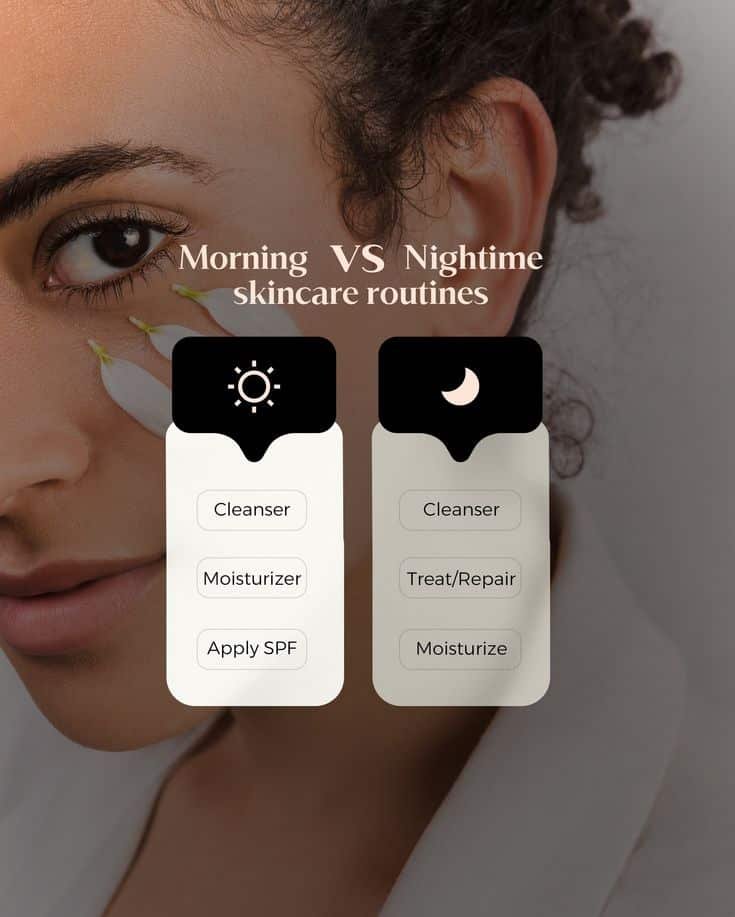

Your skin operates on a distinct schedule throughout the day, requiring different types of support in the morning versus at night. The products you apply and the steps you follow should align with whether your skin is preparing for environmental exposure or focusing on cellular repair.
Your skin follows a circadian rhythm that influences everything from oil production to how cells regenerate. During the day, your skin is in protection mode, strengthening its defensive functions to shield against external threats. Blood flow increases, and your skin works to maintain its protective barrier against whatever the environment throws at it.
At night, your skin shifts into repair mode. Cell turnover accelerates significantly while you sleep, with studies showing skin cells regenerate up to twice as fast during nighttime hours. Collagen production peaks during these hours as well. Your skin barrier becomes more permeable at night, which means it can absorb active ingredients more effectively but also loses more water.
This natural cycle explains why your morning skincare routine should focus on protection while your night skincare routine should emphasize repair and restoration.
Your morning skincare routine acts as armor against daily environmental stressors. UV rays, pollution particles, free radicals, and air conditioning all threaten your skin health throughout the day. You need products that create a protective barrier and prevent damage before it starts.
Your night skincare routine has different priorities. There are no UV rays to block or pollution to fight off. Instead, your skin needs support for its natural repair processes. This is when you can focus on addressing specific concerns like fine lines, dark spots, or uneven texture without worrying about environmental interference.
The absence of environmental stressors at night also means you can use ingredients that might increase sun sensitivity or feel too heavy under makeup.
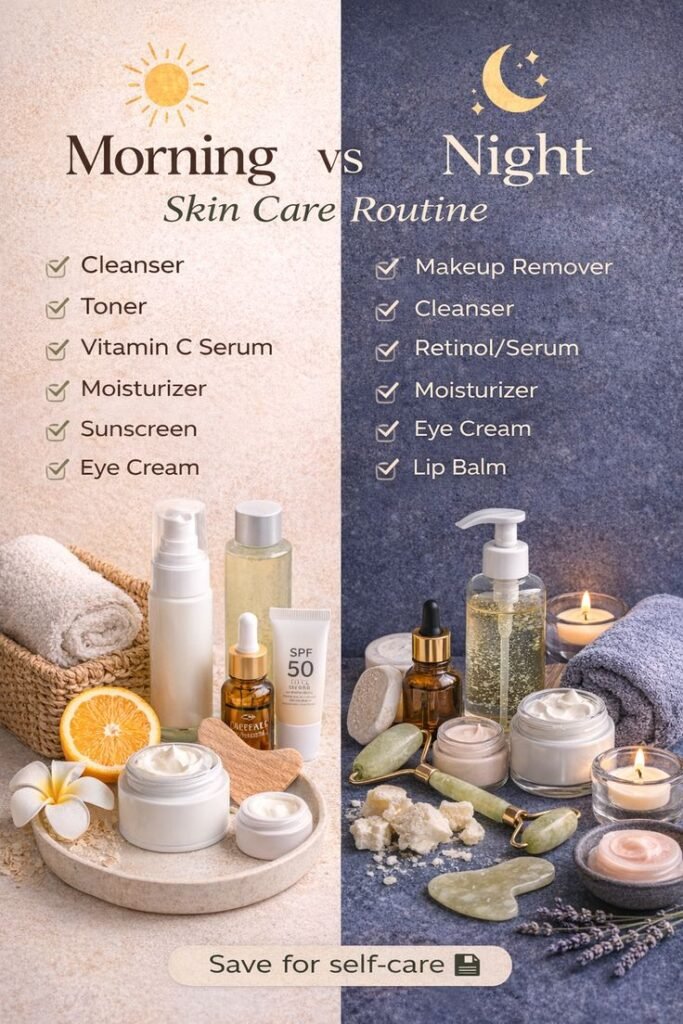
The same product can work differently depending on when you apply it. Morning applications prioritize lightweight textures that layer well under sunscreen and makeup. Antioxidants like vitamin C work best in the morning because they neutralize free radicals from sun exposure and pollution in real-time.
Nighttime applications allow for richer, more intensive formulas. Retinoids, which increase sun sensitivity, belong exclusively in your night skincare routine. Alpha hydroxy acids and other exfoliating ingredients work optimally at night when they can support natural cell turnover without sun exposure.
Your skin’s increased permeability at night means active ingredients penetrate deeper and work more effectively. Heavy moisturizers and occlusive products that might feel greasy during the day become beneficial overnight, sealing in hydration while you sleep.
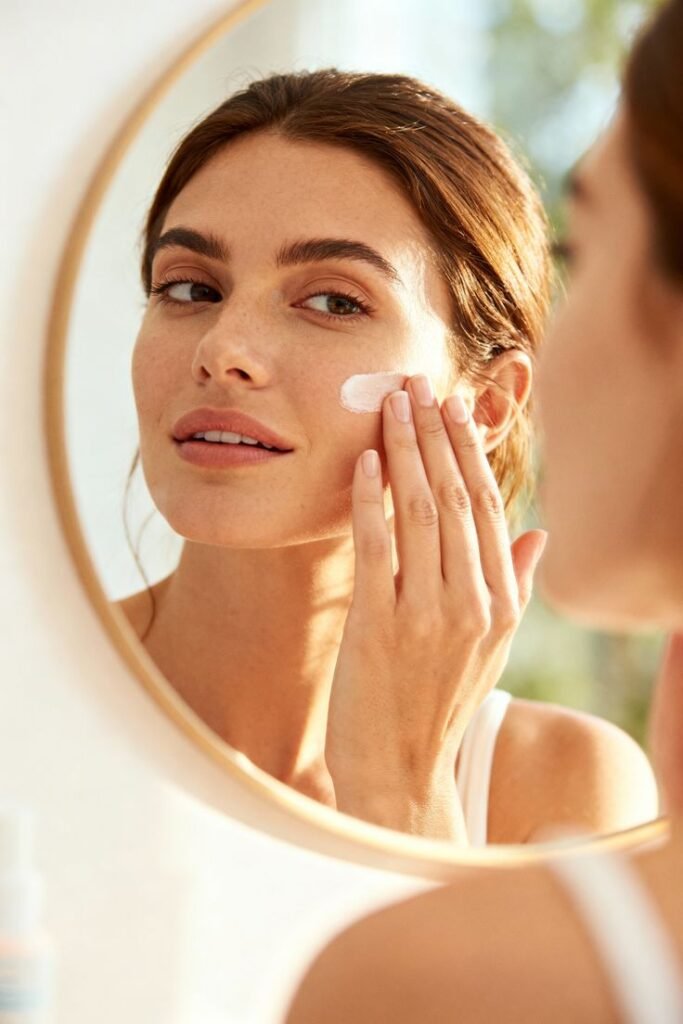


Your morning skincare routine prepares your skin to face environmental stressors while creating a protective barrier against UV damage and pollution. The focus is on cleansing away overnight buildup, applying protective antioxidants, maintaining hydration, and shielding your skin from the sun.
Starting your day with a gentle cleanser removes oil, sweat, and product residue that accumulates overnight. Your skin produces sebum while you sleep, and a morning cleanse creates a clean base for the products that follow.
Choose a cleanser based on your skin type. If you have oily skin, look for a gel-based or foaming cleanser that controls excess oil without stripping your skin. For dry skin, opt for a cream or milk cleanser that cleanses while maintaining moisture. Those with sensitive skin should select fragrance-free, sulfate-free formulas.
You don’t need an aggressive cleanse in the morning since your skin isn’t exposed to makeup or environmental pollutants overnight. A mild, pH-balanced cleanser works efficiently without disrupting your skin’s natural barrier. Some people with very dry skin may even skip cleansing and use just water or a hydrating toner.

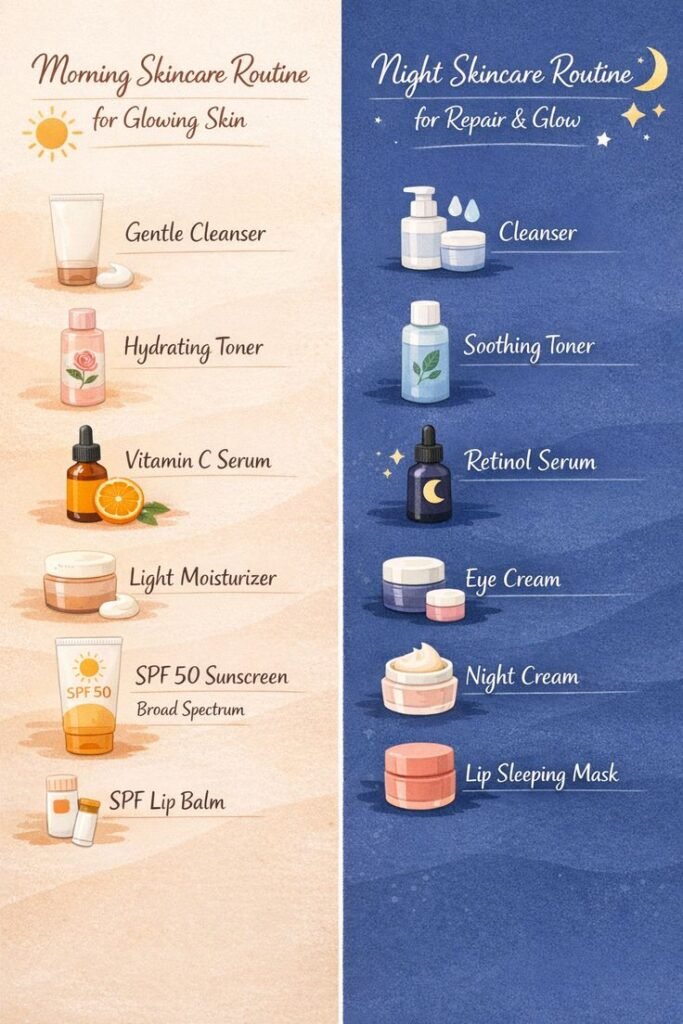
Serums deliver concentrated active ingredients that protect your skin from daily environmental damage. Applying them in the morning creates a defensive shield against free radicals from UV exposure and pollution.
Vitamin C serum is the gold standard for morning protection. It neutralizes free radicals, brightens your complexion, and boosts your sunscreen’s effectiveness. Look for formulas with L-ascorbic acid in concentrations between 10-20% for optimal results.
Other beneficial morning antioxidants include:
Apply your serum to clean, slightly damp skin. Use 2-3 drops and press it gently into your face and neck. Wait 30-60 seconds before moving to the next step so the active ingredients absorb properly.
Moisturizer locks in hydration and creates a smooth base for sunscreen and makeup application. Even oily skin needs moisturizer, though the formula should vary based on your skin type.
For dry skin, choose a rich cream with ingredients like hyaluronic acid, ceramides, or glycerin. These humectants draw moisture into your skin and prevent water loss throughout the day. Oily skin benefits from lightweight, oil-free gel moisturizers that provide hydration without adding excess shine.
Sensitive skin requires fragrance-free formulas with soothing ingredients like colloidal oatmeal or centella asiatica. Apply moisturizer while your serum is still slightly damp to seal in all the beneficial ingredients. This layering technique maximizes hydration and helps each product work more effectively.
Sunscreen is the most critical step in your morning skincare routine. Daily sun protection prevents premature aging, hyperpigmentation, and skin cancer regardless of the weather or season.
Use a broad-spectrum sunscreen with at least SPF 30 every single morning. Broad-spectrum formulas protect against both UVA rays (which cause aging) and UVB rays (which cause burning). Apply sunscreen as your final skincare step, using approximately a nickel-sized amount for your face and neck.
Choose between mineral (zinc oxide, titanium dioxide) or chemical sunscreens based on your preferences. Mineral formulas sit on top of skin and physically block UV rays, making them ideal for sensitive skin. Chemical sunscreens absorb into skin and convert UV rays to heat.
Reapply every two hours if you’re spending extended time outdoors or sweating. If you wear makeup, keep a powder or spray SPF handy for touch-ups throughout the day.

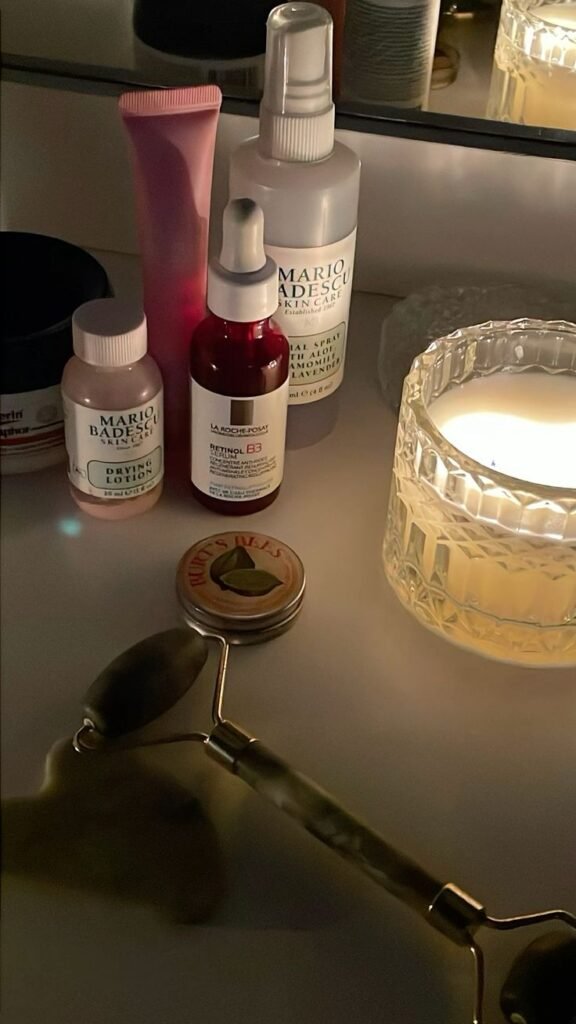

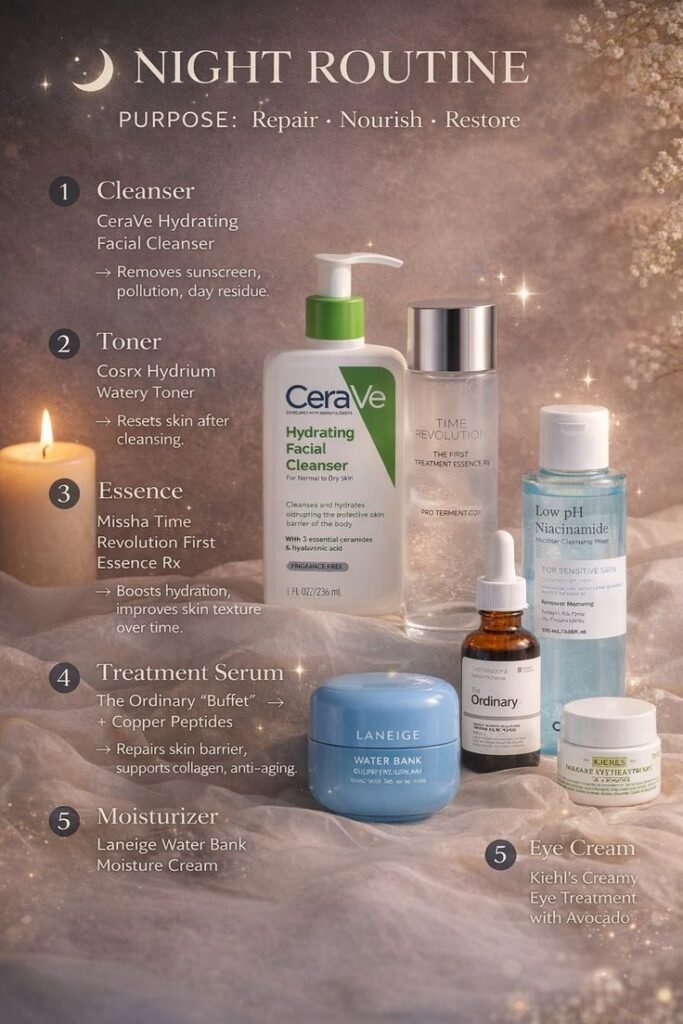
Your skin shifts into repair mode while you sleep, making your nighttime skincare routine essential for cell turnover and skin repair. This is when you apply richer formulas, active ingredients like retinol, and treatments that support collagen production and address concerns like hyperpigmentation and fine lines.
A thorough double cleanse is the foundation of your night skincare routine. Start with an oil-based cleanser or cleansing balm to dissolve makeup, sunscreen, and excess sebum that water-based products can’t remove. Micellar water works as an alternative first step if you prefer a lighter option.
Follow with your regular cleanser to remove remaining impurities without stripping your skin. This two-step process ensures your skin is completely clean so serums and treatments can penetrate effectively.
Avoid over-cleansing, which disrupts your skin’s natural barrier. If your skin feels tight or irritated after washing, you’re likely using too harsh a formula or cleansing too aggressively.
Exfoliation at night allows AHAs and BHAs to work without sun exposure concerns. Salicylic acid penetrates pores to address acne, while glycolic acid improves texture and targets hyperpigmentation. Use these 2-3 times weekly to avoid over-exfoliating, which can cause redness and sensitivity.
After exfoliating (or on non-exfoliation nights), apply treatment serums. Retinol accelerates cell turnover and boosts collagen production, making it ideal for fine lines and uneven tone. Niacinamide reduces inflammation and strengthens your skin barrier. Hyaluronic acid in a hydrating serum pulls moisture into your skin.
Layer serums from thinnest to thickest consistency. Wait 30 seconds between applications to let each product absorb properly.
Your night cream or moisturizer should be richer than your morning formula since you don’t need to worry about pilling under makeup. Look for ingredients like ceramides, which reinforce your skin barrier, and squalane, which locks in moisture without clogging pores.
Peptides in night creams signal your skin to produce more collagen while you sleep. An overnight mask provides an extra hydration boost 1-2 times weekly, especially during dry winter months.
Apply products to slightly damp skin to seal in moisture more effectively.



Eye cream addresses dark circles, puffiness, and fine lines around your delicate eye area. Pat it gently along your orbital bone using your ring finger to avoid pulling the skin.
Acne treatments with benzoyl peroxide or adapalene work best at night when they won’t interact with sunscreen. Apply them only to affected areas unless your dermatologist advises otherwise.
Spot treatments for hyperpigmentation containing vitamin C derivatives or tranexamic acid can be layered under your moisturizer. Give active ingredients time to work—most require 6-12 weeks of consistent use before you see results.
The primary difference is that morning skincare focuses on protection and preparation for environmental stressors, while nighttime skincare emphasizes repair and deep nourishment to support the skin’s natural renewal processes.
Customizing your skincare routine according to the time of day ensures that your products work in harmony with your skin’s natural rhythms, leading to better results without wasting products on unnecessary applications.
A morning skincare routine typically includes cleansing to remove overnight buildup, applying antioxidants and serums for protection, moisturizing and hydrating, and finishing with broad-spectrum sunscreen for sun protection.
In the morning, products are chosen for lightweight textures and ingredients like antioxidants that protect against environmental damage, whereas at night, richer formulas with active ingredients like retinol support repair, collagen production, and cellular renewal.
A thorough double cleanse, exfoliants like AHAs or BHAs, treatment serums such as retinol or niacinamide, richer moisturizers containing ceramides and peptides, and targeted treatments like eye creams or spot treatments are essential for nighttime skincare.